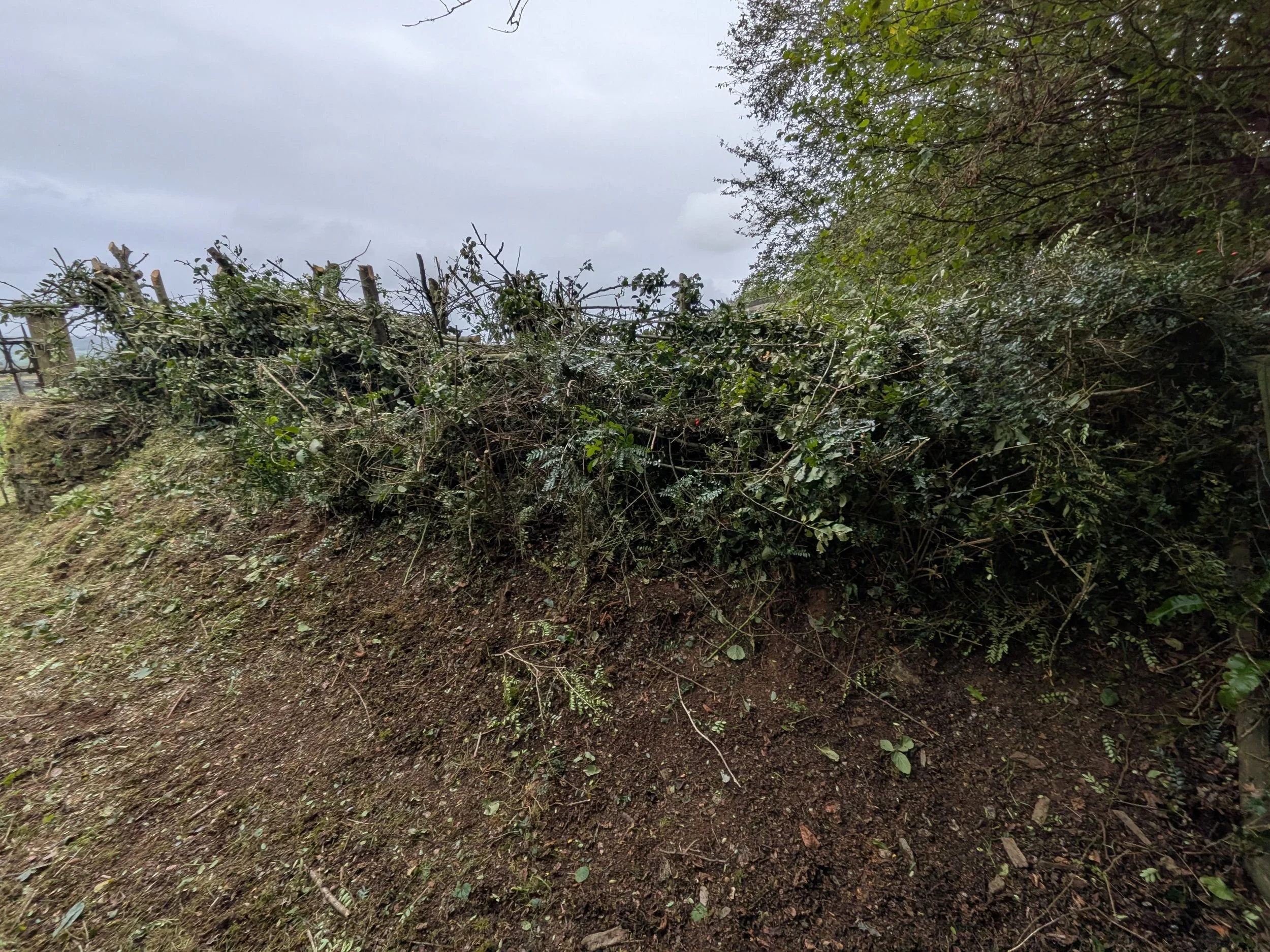
Hedge on a Local Rewilding Project
Managing a hedge in a rewilding project
Yesterday, I was out on a farm and rewilding project here in the South Hams. We were tackling a boundary that was seriously heavy going. As you can see in the photo, this was a very tall, dense hedge sitting right on the line between a heavy agricultural boundary and a practical driveway entrance.
Local Rewilding Project
🌿 Narrowing It Down When an agricultural hedge borders a driveway, you have to balance access with the ecosystem. The hedge had grown so tall and wide that it was encroaching on the drive.
Hard-cutting: We cut the heavy growth back to shape it and narrow it right down.
Restoring access: This instantly opened up the space, making the driveway accessible for vehicles again.
Maintaining the corridor: We left a healthy, solid structure that will continue to act as a vital wildlife corridor for the farm.
🦋 Rewilding & Eco-Gardening: Redistributing the Waste Rather than hauling all the green waste away, we took an approach better suited to a rewilding environment.
Bulking the boundary: We redistributed the cut branches and trimmings back into the base and gaps of the existing hedge.
Creating habitat: By carefully laying and weaving the waste back into the structure, we bulked up the boundary to keep that authentic agricultural look while providing immediate shelter and habitat for local wildlife.
🤫 Quiet Technology in Action Tackling heavy, tall growth usually involves hours of roaring petrol engines and exhaust fumes. At Totnes Gardening, I do things differently.
Battery-powered: I used my professional battery-powered long-reach trimmers to handle the heavy reduction.
Zero noise pollution: They provide all the cutting power needed for an agricultural-style cut, but without the noise and fumes.
Wildlife friendly: Because the equipment is so quiet, I actually had local birds hopping about in the branches nearby while I was cutting, completely unfazed by the work.
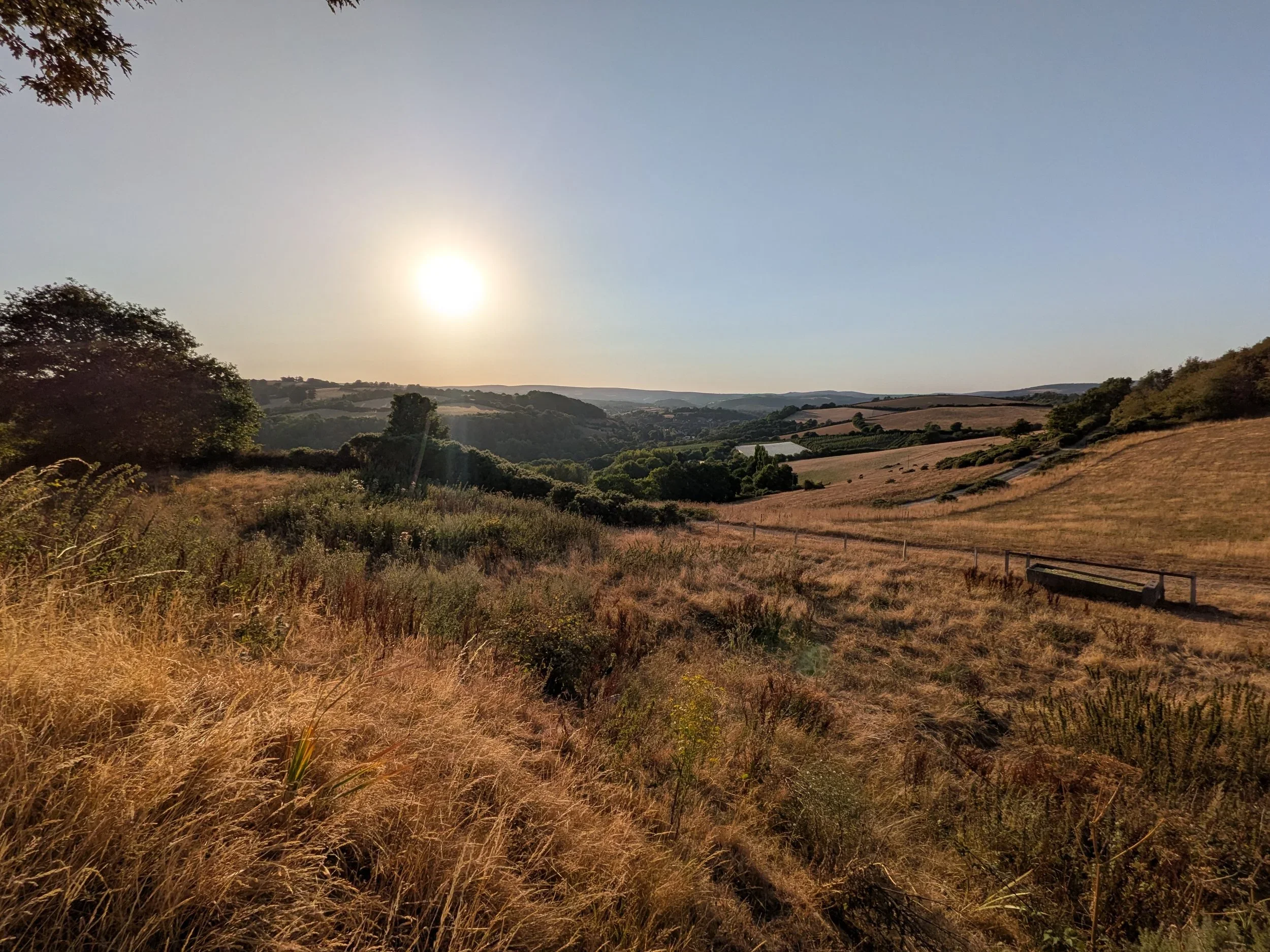
Devon heatwave
A proper Devon heatwave
13 Aug
Written By kevin hare
At Totnes Gardening, my priority right now has shifted from aesthetic pruning to life support. Here is a look at what I'm doing to keep my clients' gardens alive, and what you can do at home.
A proper Devon heatwave
Heatwave Gardening Rules
With lawns turning brown and a strict hosepipe ban in place, your garden requires careful management:
Water Efficiently: Use a watering can to target the base of your plants deeply but less frequently. Water early in the morning or late in the evening to prevent rapid evaporation.
Apply Mulch: Spread a thick layer of decorative bark or compost over your soil. This acts as a barrier to retain moisture and regulate root temperatures.
Down Tools: Stop applying fertilisers, as they force plant growth and induce extra stress. Avoid heavy pruning and raise your lawnmower blade to the highest setting if you must cut the grass.
Surviving the Summer Bake: Managing Your Garden in a Devon Heatwave
August Update: If you've looked out across the valley recently, you'll know exactly what I'm talking about. The lush greens of spring have given way to the scorched, straw-coloured hues of a proper Devon heatwave.
It has been an exceptionally dry and hot few weeks here in the South Hams. While we all enjoy a bit of sunshine, this kind of sustained, intense heat puts an enormous amount of stress on our gardens. Plants that normally thrive in our usually temperate climate are suddenly fighting for survival.
The Golden Rules of Heatwave Watering
When the ground is this baked, a quick splash with the hose does more harm than good.
Water Deeply, Less Often: Surface watering encourages roots to stay near the top of the soil, making them even more vulnerable to the heat. We need to soak the ground thoroughly so the water penetrates deeply, encouraging roots to grow downward where it's cooler and damper.
Timing is Everything: I am starting my days earlier than ever to get the watering done before the sun has a chance to evaporate it all. Always water first thing in the morning or late in the evening. Never water in the midday sun, as droplets on the leaves can act like magnifying glasses and scorch the plants.
The Power of Mulch (Decorative Bark)
If there is one single thing I recommend doing right now, it’s mulching.
As I mentioned in a recent update, I have been laying down a lot of decorative bark lately.
A thick layer of bark (or compost, if you have your own system running!) acts like a thermal blanket for the soil. It achieves two critical things during a heatwave:
Moisture Retention: It dramatically slows down evaporation, meaning the water you apply actually stays in the soil for the plants to use.
Temperature Regulation: It shades the soil, keeping the root systems significantly cooler than if they were exposed to the baking sun.
Down Tools: What NOT to Do
During a heatwave, the goal is minimal stress. This means stopping certain routine tasks:
Stop Fertilizing: Pushing a plant to grow when it is already stressed by heat and lack of water is a recipe for disaster. Wait until the weather breaks and the soil is moist again before feeding.
Raise the Mower Blade: If you absolutely must mow the lawn, raise the cutting height as high as it will go. Longer grass shades its own roots and helps the soil retain moisture. Ideally, just let the lawn go dormant—it will recover when the rain returns.
Hold off on Planting: Unless you are prepared to water religiously every single day, now is not the time to be putting new plants into the ground. Keep new purchases in their pots in a shaded area until conditions improve.
Let's Get Through the Heat
If your garden is struggling and you need help implementing these survival strategies, please get in touch. Whether you need an emergency watering schedule set up or a heavy application of moisture-retaining bark, I am here to help your plants weather the storm (or lack thereof!).
Stay cool, and keep those roots covered.
📧 Email:kevin@totnesgardening.co.uk 🌐 Website:www.totnesgardening.co.uk
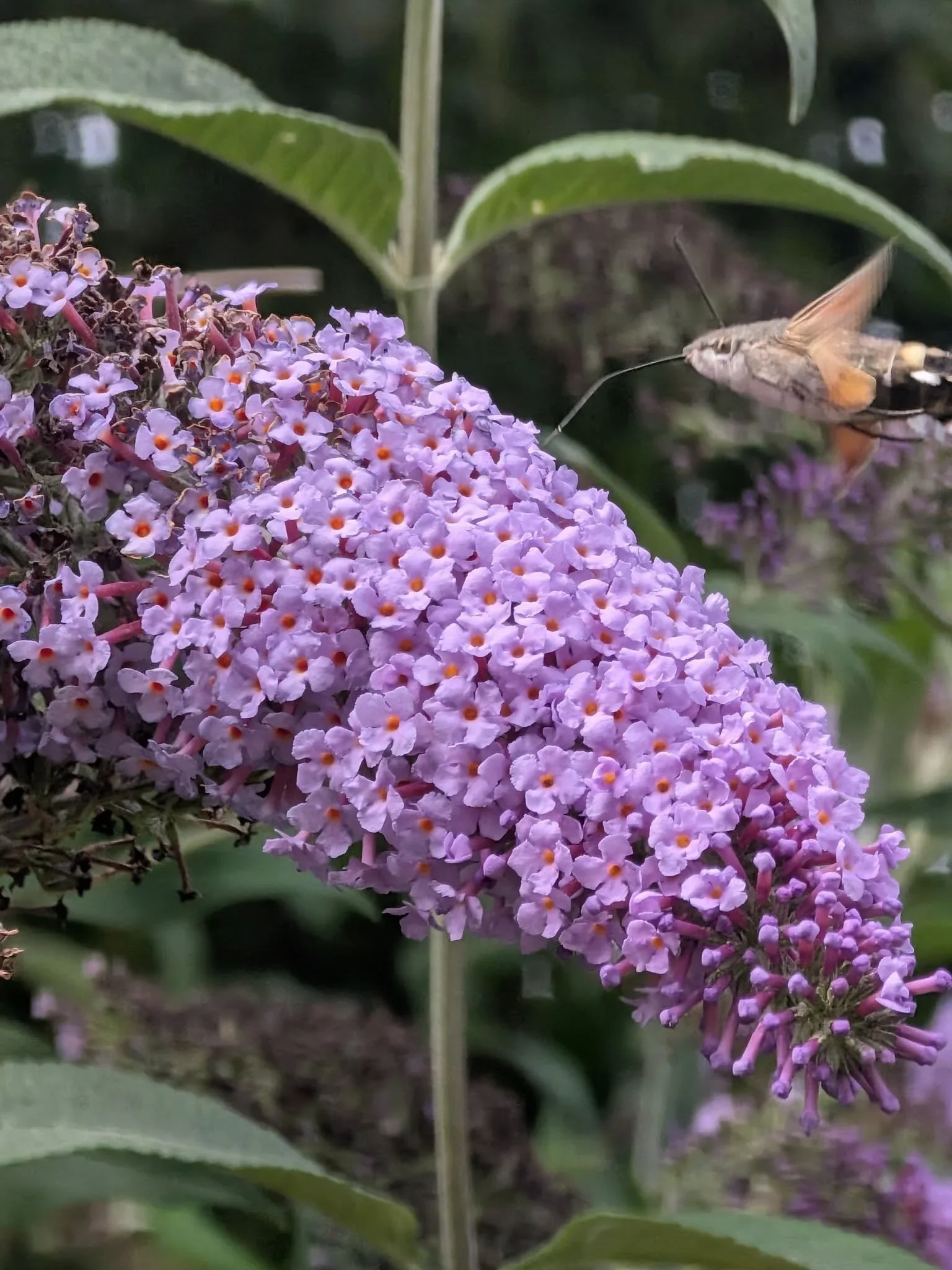
Hummingbird Hawk Moth Summer
A Hummingbird Hawk Moth Summer 🦋
15 Aug
Written By kevin hare
The UK is currently experiencing an exceptional "hummingbird hawk-moth summer" in 2026, with wildlife organisations reporting an unusually massive influx of these spectacular day-flying insects across British gardens and coastal areas.
"Have you seen a tiny, darting 'bird' hovering around your flowers this August? You aren't alone. You're actually witnessing a historic wildlife migration right in your own back garden."
"Just a few years ago in 2021, there were only 8 recorded sightings of the Hummingbird Hawk-moth in the UK. This summer, we've hit a record-breaking peak of over 9,000. But spotting them can be tough. They are quite elusive, spooky little creatures with an almost fairy-like presence that makes them incredibly hard to track."
Why Are There So Many This Year?
Southerly Winds: Strong winds across Europe have physically pushed the moths further north.
European Heatwaves: High temperatures in the Mediterranean caused an explosive migratory influx.
Weather Shifts: Climate change is causing unpredictable summer weather that alters insect migration trends.
Watch today's visitor enjoying the Buddleia in my garden!
"When they finally do come close, the speed is staggering. Their wings beat an astonishing 80 times every single second. That’s why I had to film this visitor in slow-motion—it’s the only way to truly appreciate their bright orange hindwings and see exactly how they use that long proboscis to drink nectar on the wing."
Spectacular Totnes Visitor: Spotting the Hummingbird Hawk-Moth
Summer Update: While out working in the garden today, I was treated to one of my absolute favourite summer sights. If you've been hearing a low hum around your flower beds or seen what looks like a tiny, erratic bird hovering over your borders, you aren't alone!
"In the summer of 2021, there were just 8 of these recorded in the UK. This year? Over 9,000."
"The secret to seeing them? Total stillness.
If you find a nectar-rich plant like this Buddleia and just freeze, they will treat you like part of the garden and come right up to you."
"They beat their wings an unbelievable 80 times a second to hover like this, which is exactly why I had to film this one in Totnes in ultra slow-motion."
(Watch today's visitor enjoying the Buddleia in my garden!)
The hummingbird hawk-moth (Macroglossum stellatarum) is easily mistaken for a genuine hummingbird due to its unique feeding behaviour and morphology
Whenever the summer heat sets in across the South Hams, people start talking about a very unusual visitor to our local gardens. And it's not just here in Devon—organizations like The Wildlife Trusts are officially declaring it a "Hummingbird Hawk-moth summer" across the UK!
Today, I managed to capture some footage of this incredible Hummingbird Hawk-moth (Macroglossum stellatarum) right here in my own garden in Totnes, feeding on a purple Buddleia. With its rapid wingbeats, audible humming sound, and darting flight pattern as it hovers to feed, it is incredibly easy to mistake for an actual hummingbird.
These fascinating moths are summer migrants, flying over from Southern Europe and North Africa in varying numbers each year to enjoy our warmer months. As you can see in the video, they have a brilliant, long proboscis that acts like a straw, allowing them to drink nectar on the wing without ever needing to land. I managed to get such great footage today that I'm actually planning to put together a full YouTube video on our channel showcasing these amazing visitors and the best plants to attract them—so keep an eye out for that soon!
🦋 Why This Matters for Your Garden
At Totnes Gardening, my core philosophy is that we aren't just maintaining a plot of land; we are "managing the ecosystem." Seeing visitors like the Hummingbird Hawk-moth is the ultimate reward for good ecological gardening.
These moths—along with our local bees, butterflies, and hoverflies—are drawn to gardens that offer a rich, continuous supply of nectar. They absolutely love tubular flowers, which is why this one made a beeline straight for the Buddleia (often rightly called the butterfly bush!), but they also love Valerian, Verbena, and Honeysuckle.
When we design planting schemes or manage rewilding zones, this is exactly the kind of life we are trying to attract. A garden shouldn't just look tidy; it should be buzzing, fluttering, and completely alive.
"As an eco-gardener here in Totnes, I've learned a trick to getting close. The secret is total stillness and the right plants. These moths need high-octane fuel for their intense lifestyles, so they absolutely love tubular flowers. If you stand completely still next to a Buddleia—the butterfly bush—they will eventually ignore you, treating you as just another part of the garden."
Let's Bring Your Garden to Life
"At Totnes Gardening, we believe in creating buzzing, living ecosystems. If your garden is missing this kind of summer magic, it might be time for a rethink. Head over to totnesgardening.co.uk to read my full guide on creating a pollinator haven, and don't forget to let me know in the comments if you’ve spotted one of these moths yet!"
If your Totnes garden is currently lacking that summer buzz, it might be time to rethink your borders.
Whether you want to integrate a small-scale wildflower meadow, add some high-nectar perennials and shrubs (like Buddleia) to attract more pollinators, or simply need some knowledgeable maintenance that protects local habitats, I'm here to help.
Let's make sure your garden is a haven for you and the local wildlife.
📧 Email:kevin@totnesgardening.co.uk
🌐 Website:www.totnesgardening.co.uk ✅ Fully Insured | ♻️ Licensed Waste Carrier | 🌿 Eco-Gardening Specialist
Reclaiming the View: A Riverside Garden in Totnes
Reclaiming the View: A Riverside Garden in Totnes
Sometimes, the most satisfying transformations are those that unveil hidden gems. This recent project involved breathing new life into an overgrown garden area, revealing a breathtaking view over the River Dart in Totnes.
Reclaiming the View: A Riverside Garden in Totnes
By carefully clearing back the excess growth, we've opened up the space and reconnected it with its stunning surroundings. The result? A revitalized area with a panoramic vista of the River Dart, bringing joy to both our clients and the local wildlife.
Rewilding isn't just about letting nature run wild; it's about creating a harmonious balance, where both nature and humans can thrive. This gardening project is a testament to that philosophy, showcasing how thoughtful intervention can enhance the beauty and biodiversity of our surroundings while reconnecting us with the unique landscape of Totnes.
The Art of Quiet Gardening 🐦⬛
6 Jun
Written By kevin hare
Yesterday, while I was out tending to a lawn here in Totnes, I had some wonderful company. As I moved across the freshly cut grass, a resident pair of blackbirds—the striking male with his bright yellow beak and the beautifully speckled brown female—moved in right behind me to forage. It is moments like these that remind me why I do what I do.
You might have noticed that when a lawn is freshly cut, the birds move in almost immediately.
Trimming the grass exposes the ground, making it much easier for them to spot and collect insects to take back to the nest.
You might wonder why they don't simply fly away when I get close.
As I was watching the female blackbird scurrying almost defiantly around my feet yesterday, it hit me: during nesting season, they are in intense "hunting mode."
Flying burns precious energy, while running conserves it.
But more importantly, they’ve figured out that my mower and my boots are doing the hard work for them—flushing out insects and kicking up the soil!
Watching the pair yesterday, I was reminded of their fascinating hunting technique. You’ll rarely see a blackbird simply walking. Instead, they use a distinctive "run-stop-run" or hopping motion. When they stop, they often freeze and tilt their head sharply to one side.
Many people think they are listening for earthworms, but the science is actually much cooler! Because blackbirds have eyes on the sides of their heads (monocular vision), tilting their head allows them to focus one eye directly on the grass. The hopping and running startles the insects or worms, and the sudden stop and head tilt allows the blackbird to lock its vision perfectly onto the tiny movements of the prey beneath the soil. It's a high-speed game of "Red Light, Green Light" played with worms!
The Benefit of Going Electric
One of the reasons I was able to observe this hunting dance so closely is my commitment to quiet technology. Because Totnes Gardening uses professional battery-powered equipment, there isn't the deafening roar of a petrol engine or the acrid smell of exhaust fumes to trigger a bird's survival instinct to fly away.
When the machinery is quiet, the garden stays peaceful. The birds learn that I'm not a predator, but rather a helpful presence kicking up their next meal. It allows me to work with the ecosystem rather than disrupting it.
The Art of Quiet Gardening
This philosophy goes beyond just swapping petrol for batteries. In a world that often feels overwhelmingly loud and fast-paced, our gardens should be our sanctuaries. Yet, we often approach our outdoor spaces as battlegrounds—fighting weeds with chemicals and beating back nature with heavy machinery.
Quiet Gardening is about shifting our entire perspective from "yard work" to "stewardship." , it emphasizes gentle maintenance, fostering biodiversity, and creating a sensory experience that promotes deep relaxation.
If you would like to transform your patch into a sanctuary for both you and our local songbirds, here are a few core principles we can adopt:
Minimize Noise and Chemicals: The hum of bees should be the dominant sound in a garden. Avoid herbicides and chemical fertilizers entirely. A healthy, pesticide-free lawn means more natural food for the birds and a safer environment for pollinators.
Practice Mindful Maintenance: Shift your focus to methods that build health rather than just tidying up messes. Embrace "No-Dig" principles to protect vital soil structure by mulching rather than tilling. Rely heavily on perennials to reduce the need for constant soil disturbance.
Rewild the Edges: A slightly wilder space is a haven. Use native plants that Devon bees and butterflies have evolved alongside. Encourage self-seeding plants like foxgloves, and dare to leave some corners "messy" with leaf litter and mulch to provide the perfect hunting ground for insects.
Add Water: A small birdbath or a managed wildlife pond provides a vital drinking and bathing spot for visiting wildlife.
Watch the Moment
I managed to capture a quick clip of yesterday's atmosphere and our feathered friends doing their classic "run-stop-look" dance.
Watch:Blackbirds hunting on a freshly cut lawn
This YouTube Short, titled "The Art of Quiet Gardening 🐦⬛ @totnesgardening", captures a peaceful, real-time moment of ecological land care in Totnes.
Video Summary
The video showcases Kevin Hare's "Quiet Gardening" philosophy in action. While he is out tending to a local lawn, a resident pair of blackbirds—a striking jet-black male with a bright yellow beak and a speckled brown female—follow directly behind his mower. Because his battery-powered tools generate minimal noise and zero harsh petrol fumes, the local wildlife is not scared away. Instead, the birds safely forage for displaced insects in the freshly cut grass immediately after he passes.
🌱 Core Themes
Wildlife Harmony: Demonstrating how low-impact, quiet machinery allows humans to work alongside nature without disrupting animal behaviors.
Ecological Benefits: Highlighting the immediate, real-world biodiversity rewards of moving away from loud, disruptive fossil-fuel-powered garden tools.
Would you like to explore how to attract foraging birds like blackbirds to your own garden, or are you interested in learning more about the specific battery-powered equipment used in quiet commercial gardening?
You don't need to do everything at once; Quiet Gardening is a slow, mindful process. Start small. Before you plant or prune, simply sit. Listen to what you hear, and see what naturally thrives in your soil. Your garden is waiting to become your sanctuary—all it asks is that you listen.
Want your garden to be a sanctuary for both you and the local wildlife?
Whether you need quiet seasonal maintenance, a rewilding plan, or structural border care, let's cultivate peace in your patch.
📧 Contact Kevin:kevin@totnesgardening.co.uk
✅ Fully Insured | ♻ Licensed Waste Carrier | 🌿 Expert Pedigree | 🔋 Quiet Technology Specialist
Decorative Bark
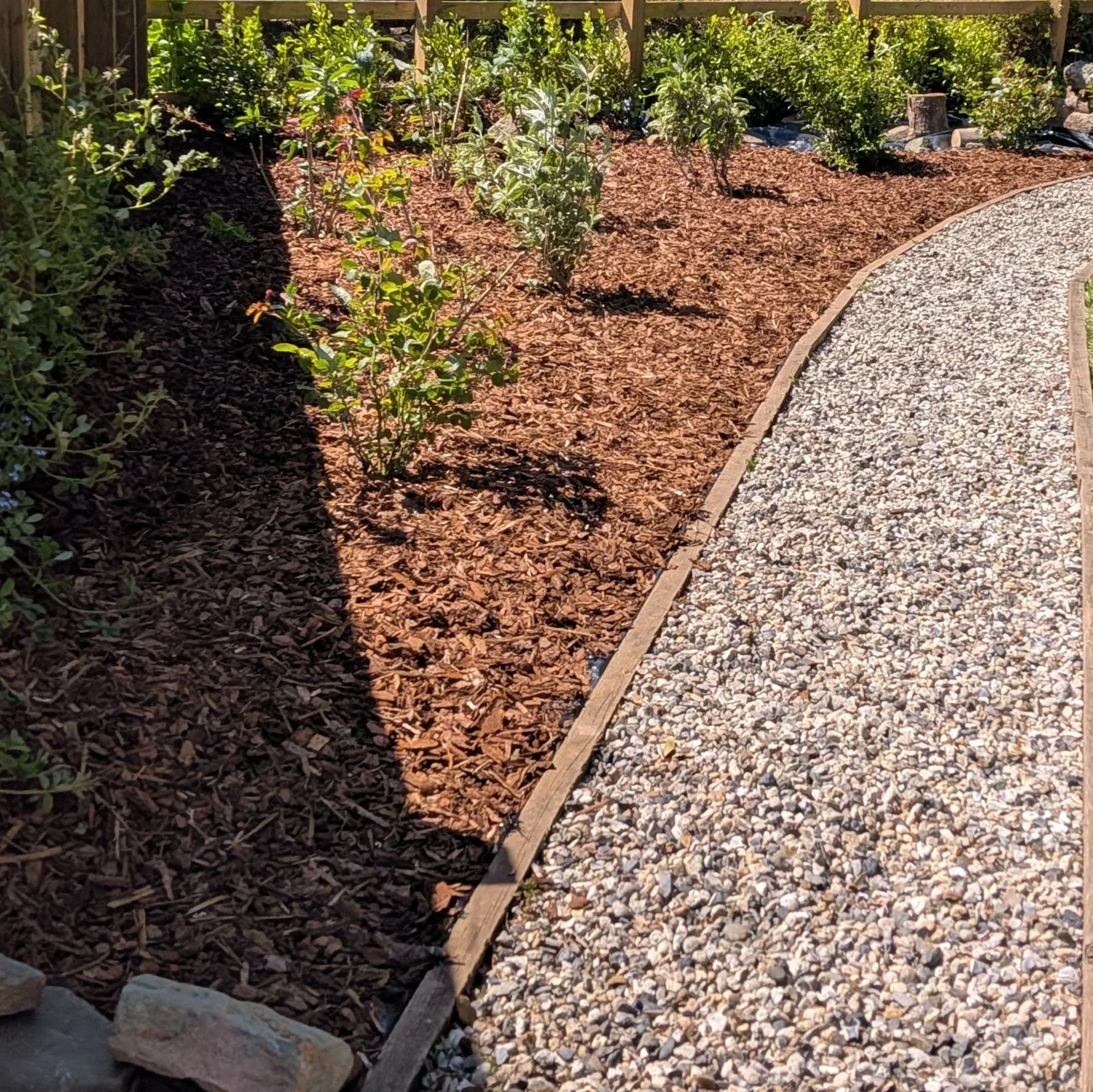
Yesterday’s focus was all about the "top-dress." I was out in a local garden applying a fresh layer of decorative bark, and it reminded me just how much of a difference the right mulch makes to the character of a Totnes garden.
While we often talk about what goes into the ground—like in my post on Gardener’s Gold—what we put on the ground is just as vital for a healthy, professional finish.
Decorative Bark Totnes Garden
The Bark Breakdown
For this project, I chose a high-quality decorative bark. It’s not just about covering the mud; it’s about creating a stable environment for the plants.
Moisture Management: Even when we aren't seeing rain, our heavy clay can bake hard and crack. A thick layer of bark acts like a cooling blanket.
Erosion Control: On the slopes we often deal with in the South West, bark "knits" together, preventing the soil surface from washing away during heavy watering.
Aesthetic Structure: It provides that "Town Garden" contrast, making the greens of the foliage really pop against the deep, earthy tones of the wood chip.
The Membrane Choice
I did something yesterday that I often debate in my other posts: I laid a membrane beneath the bark.
In my Planting Totnes Gardens guide, I usually advocate for direct contact between mulch and soil to improve the clay. However, for this specific site, we needed a long-term barrier against aggressive weeds. By using a membrane yesterday, we ensured that the decorative bark stays clean and sit-on-top perfect, rather than being pulled down into the clay by worms.
Form vs. Function
Bark is incredibly versatile, but you have to know your goal:
With a Membrane: Best for paths and low-maintenance borders where you want the bark to stay "as new" for as long as possible.
Without a Membrane: Best for "Living Borders" where you want the bark to rot down and feed the soil, eventually becoming that "Gardener’s Gold" we all strive for.
Yesterday was a win for Form and Function. The garden looks revitalised, the weeds are suppressed, and the plants have a clean, protected base to grow from.
Are you a fan of the clean look of decorative bark, or do you prefer a more "wild" mulch approach in your own space?
Grass Cutting in Totnes
Transform your lawn into a lush, vibrant masterpiece with Totnes Gardening’s expert grass cutting services. Hi, I’m Kevin, your local Totnes gardener with over 20 years of experience, honed at Dartington Hall Gardens. Whether you have a cozy town garden or a sprawling countryside estate, I bring passion, precision, and eco-conscious care to keep your lawn thriving.
Why Choose Totnes Gardening for Lawn Care?
Flawless Finish: Precision mowing and edging for a crisp, professional look that elevates your property.
Eco-Friendly Approach: Quiet, battery-powered mowers and sustainable practices to nurture your lawn and the planet.
Personalized Care: Tailored services, from weekly cuts to seasonal boosts, designed for your lawn’s unique needs.
Totnes Expertise: Deep knowledge of local soil and climate, ensuring your grass grows strong and green.
Hassle-Free Service: We tidy up clippings and debris, leaving your garden spotless and serene.
Our Lawn Care Services
Beyond perfect mowing, we offer a full suite of services to make your lawn the pride of Totnes:
Mowing & Edging: Regular cuts at the ideal height, with clean borders for a polished finish.
Aeration: Boosts soil health, improving drainage and nutrient flow to grass roots.
Overseeding: Fills bare patches for a thicker, lusher lawn.
Weed Control & Fertilization: Organic treatments to banish weeds and nourish your grass.
Leaf Clearance: Keeps your lawn free of debris, preventing damage and disease.
De-thatching: Removes buildup to promote healthy growth and vibrancy.
Beyond the Basics
Take your lawn to the next level with our specialized services:
Lawn Rolling: Smooths out bumps for a flawless surface.
Lawn Spiking: Enhances aeration and drainage for deeper roots.
Why Your Lawn Deserves Totnes Gardening
With a passion for creating sustainable, beautiful gardens, I’m committed to delivering outstanding results. Fully insured, reliable, and rooted in Totnes’s natural charm, I work closely with you to bring your vision to life. Plus, our competitive prices and transparent quotes ensure peace of mind.
Grass Cutting
Strategic Mowing: The Secret to a Living, Breathing Totnes Lawn
If you walk through a garden I’ve just finished tending, you won’t hear the smell of petrol or the roar of an old engine. Instead, you’ll hear the bees.
For over 20 years, I’ve been looking after gardens across Totnes. But over the last four years, I’ve moved away from the "tidy-at-all-costs" mindset. I’ve realized that a beautiful lawn shouldn't be a green desert—it should be a habitat.
It’s Not About Letting Go. It’s About Cutting with Intelligence.
There’s a common worry that "Eco-Friendly" means "Messy." As Kevin Hare rightly put it, "Rewilding isn’t about abandoning your garden—it’s about designing with nature in mind."
I call my method "Strategic Mowing." It’s a technique designed to unlock the hidden layer of biodiversity already waiting in your soil. You don’t need expensive seed packets; you just need the right timing and a bit of professional intuition.
The Strategy Behind the Cut
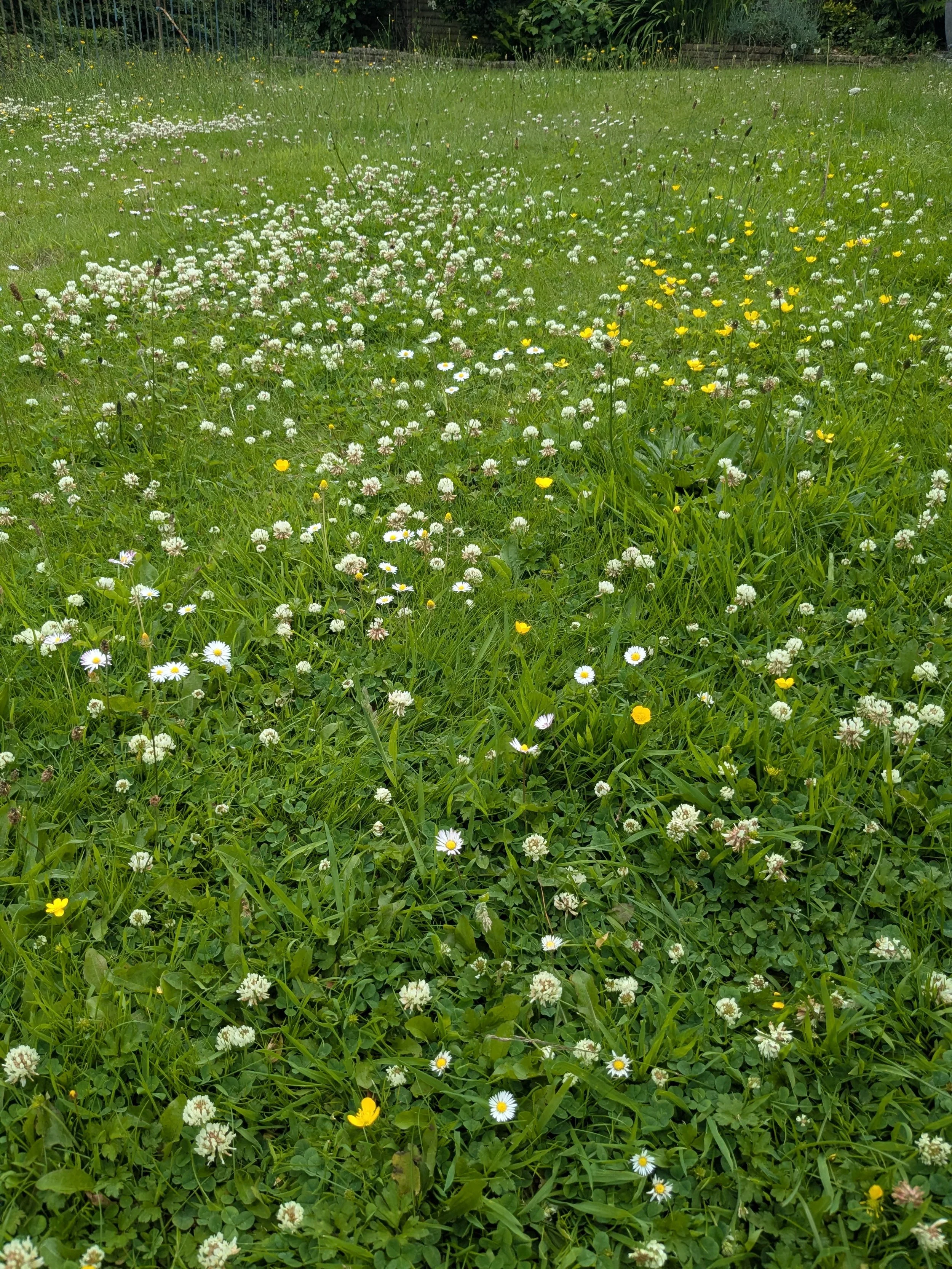
How do we get a lawn bursting with white clover, daisies, and buttercups? It’s a three-step process that mimics the natural rhythms of the land:
Taming the "Bullies": By keeping the grass shorter in early spring, I weaken the aggressive, fast-growing grasses. This opens up the "canopy," giving delicate wildflowers the light they need to break through.
The "Lean" Soil Secret: Wildflowers hate rich, fatty soil. I always clear the clippings. By removing that nitrogen-heavy organic matter, I starve the thick grass and create the lean conditions where native flowers thrive.
Creating a Habitat Mosaic: I don't treat the lawn as one flat carpet. By leaving some patches longer and cutting others short, I mimic ancient grazing patterns. This creates a "mosaic" of heights that supports different insects at different times of the year.
Boosting the Bees in our Unique Climate
Totnes is special. With our 800–1000mm of annual rainfall, our gardens are lush, but they can easily become overgrown. My mowing schedule ensures that native, moisture-loving flowers provide nectar exactly when our local pollinators need it most.
When I pull my battery-powered mower away, the change is instant:
Bumblebees head straight for the red and white clover.
Honeybees get to work on the daisies.
Solitary bees find shelter in the longer fringes.
Quiet, Sustainable, and Local
We use quiet, battery-powered mowers because we believe gardening should nurture the planet, not pollute it. We’re not just cutting grass; we’re tending to an ecosystem.
Want to see what’s hiding in your lawn? Let’s stop fighting nature and start working with it.
Explore Wildflowers & Strategic Mowing
Taming the Jungle: A Week of Grass Cutting in Totnes
It must be something in the air this week. My phone has been ringing with calls from people all saying the same thing: "The garden has just got away from me." It happens to us all. You turn your back for a moment, and suddenly the lawn looks less like a lawn and more like a jungle. When a property has been left to its own devices, it takes a proper plan to put it right.
This week has been all about Grass Cutting, but I’m not talking about a quick trim. I’m talking about full-on garden reclamations. Here are a few stories from the front line.
The Forgotten Back Garden
The first job of the week was a classic case. A lovely back garden that, due to a busy few months, had turned into a sea of waist-high grass and weeds. You couldn't even see the path to the shed.
For a job this heavy, you can’t just use a normal mower. This is a job for the heavy-duty strimmer. It’s a slow and steady process, working in sections to methodically battle through the thick growth. It’s hard work, but incredibly satisfying. As the layers of long grass come down, you start to reveal the garden's original shape of the garden again. By the end, we had a huge pile of cuttings ready for my Garden Waste removal service and a garden that the owners could actually use again.
The "Accidental" Meadow
Sometimes, an overgrown lawn isn't a problem, it's just a change of plan! One garden I worked on had become a beautiful, accidental wildflower meadow. It was full of life, which is a fantastic part of my Rewilding philosophy. However, the owner wanted a section of it back for the kids to play on.
Here, the job was more strategic. We decided on a mowing plan that kept the wilder areas around the edges but created a large, usable lawn in the centre. It’s a great compromise – you get the best of both worlds. It's a reminder that good Lawn Care isn't always about a perfect bowling green; it's about making the space work for you.
Freeing the Front Garden
My final big grass cut of the week was a front garden where the long grass was making the whole property look unloved. The grass had swallowed the edges of the flower beds and was creeping over the driveway.
A thorough cut and some crisp, sharp edging completely transformed the look of the house from the street. It’s amazing the difference it makes. It’s the core of my Garden Maintenance service – bringing that sense of order and care back to a space. It wasn't just a grass cut; it was a full Garden Clearance that instantly lifted the property's kerb appeal.
It’s been a busy week of summer jobs, from admiring the simple joy of daisies to understanding the magic of hydrangeas. These big reclamation projects are tough, but seeing the immediate, dramatic transformations makes it all worthwhile. It's a reminder that, with the right approach, no garden is ever truly lost.
If your lawn is starting to feel more like a jungle and you don't know where to start, give me a call.
Contact me today. Let's reclaim your garden together.
Kevin's Guide to a Great Lawn
A good lawn is the heart of a garden, but keeping it looking great can feel like a bit of a dark art. People are often worried they're cutting it too short, too often, or with the wrong kind of mower.
Forget the confusion. Here’s my straightforward guide to mowing, based on years of keeping lawns in Totnes healthy and looking sharp.
The Rhythm: How Often Should You Mow?
The simple answer is: it depends on the season and how fast your grass is growing. But as a rule of thumb for a standard lawn:
Spring & Autumn: The grass is growing steadily. I'm usually mowing every week or two to keep on top of it.
Summer: When it's warm and getting decent rain, you'll be on a weekly schedule. But—and this is important—when it gets hot and dry, you need to ease off. Let the grass grow a bit longer to help it cope with the heat.
Winter: You can pretty much put the mower away. Unless it's unusually mild and you see some growth, leave it be. Never, ever mow a wet or frozen lawn. You'll just damage the grass and compact the soil.
Heard of 'No Mow May'? Here's My Take.
I'm a huge fan of this. As part of my Rewilding philosophy, I encourage clients to leave all or part of their lawn uncut for May. You will be amazed at the wildflowers that appear, and the bees and butterflies will thank you for it. You can always start mowing again in June, or leave it longer to develop into a proper summer meadow.
The Height: How Short Should You Go?
This is where a lot of people go wrong.
The Golden Rule: Never remove more than one-third of the grass height in a single cut.
If you let it get too long, don't just scalp it down to your desired height in one go. Do a high cut first, then a few days later, bring the blades down and cut it again.
And please, don't be tempted to mow it like a bowling green unless you're prepared for the work that goes with it! Cutting too short is one of the worst things you can do. It stresses the grass, encourages shallow roots, and opens the door for weeds and moss to move in.
For most family lawns in Totnes, a height of about 25mm (1 inch) in summer and a bit longer in spring and autumn is perfect.
Getting That Striped Look
Everyone loves a striped lawn. It looks professional and sharp, and it's not as hard as you think. The secret isn't some special technique; it's the mower. You need a mower with a rear roller.
Start by mowing a header and footer row at each end of the lawn. Then, just work your way up and down, slightly overlapping each stripe. For the best lawn health, I always recommend changing the direction of your stripes each time you mow—say, diagonals one week, straight the next.
A Word on Your Mower
Your mower is your most important tool for lawn care. The single best thing you can do for your lawn is keep the blades sharp. A blunt blade tears and rips the grass, leaving it bruised and open to disease. A sharp blade gives a clean cut, which means a healthier, better-looking lawn.
It’s been a busy week of putting this into practice. I’ve been doing full Garden Clearance jobs where the lawn had turned into a jungle, requiring a heavy-duty strimmer before the mower could even get near it. You can read the story of one of those jobs on my blog post: From Jungle to Garden: A Full Day's Reclaim in Totnes.
Whether you need a regular, reliable Grass Cutting service or a one-off rescue mission for a lawn that's gotten out of hand, I can help.
Contact me today, and let's get your lawn looking its best.
Gardener’s Gold
Bringing a 'Hidden' Totnes Lawn Back to Life
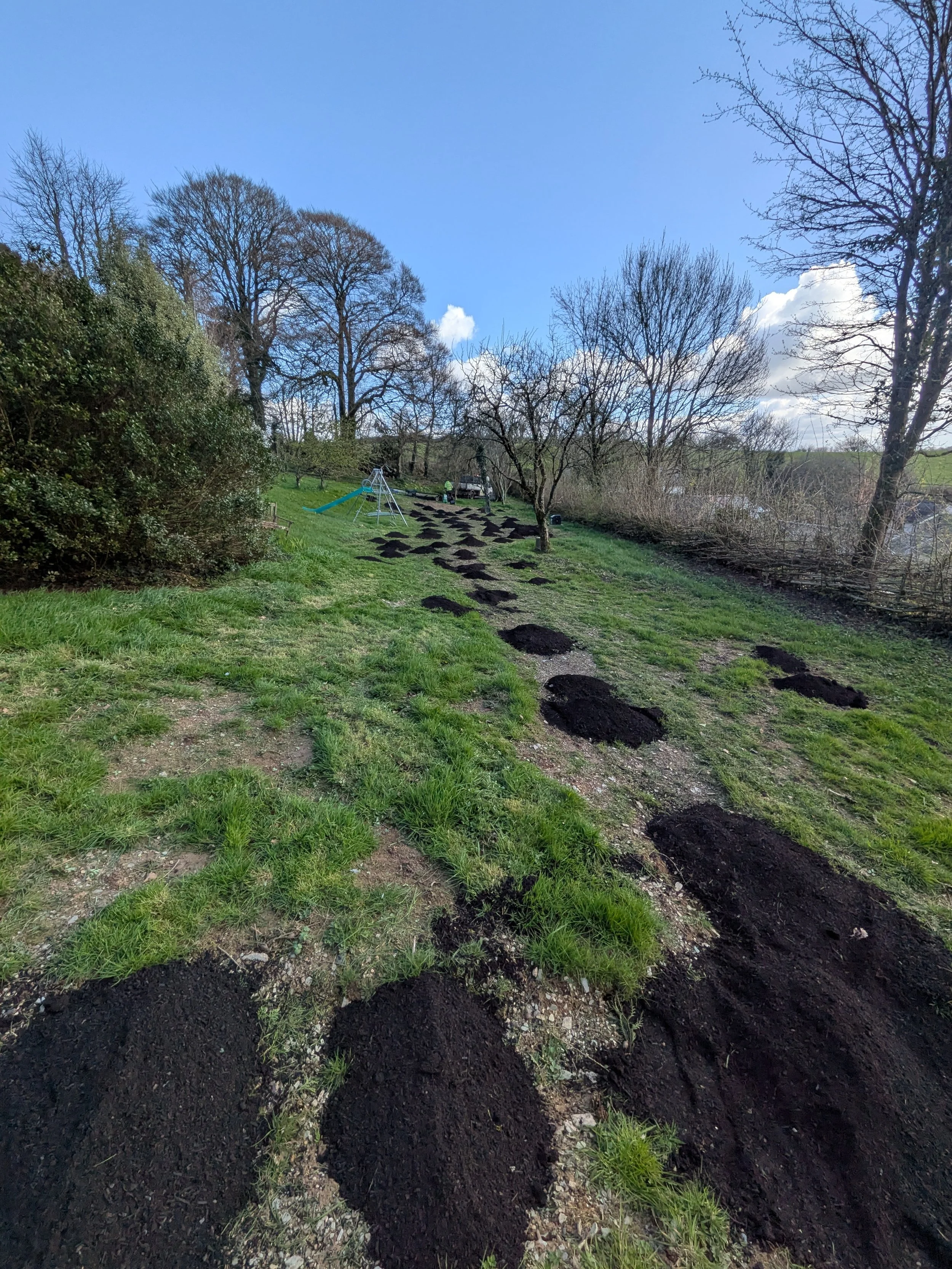
If you’ve read my philosophy on organic compost, you know I call it "Gardener’s Gold." Today, I wasn't just talking about the theory—I was putting it to the ultimate test on a Totnes lawn that had completely vanished under the weight of a recent landscaping project.
The Problem: The 'Hidden' Lawn
After the diggers leave and the stone is laid, the remaining grass is often left "hidden" under a thick layer of construction dust and heavy soil compaction. This causes the soil to become anaerobic—meaning it can’t breathe, the beneficial biology dies off, and the ground looks more like a dry dirt track than a garden.
You can’t just throw seed on "dead" dirt and hope for a miracle. To get real results, you have to restart the engine of the soil itself.
The Solution: Sourcing the Best from Marldon
To bring this site back to life, I headed over to see Gavin and the team at Wildwoods Contractors in Marldon. I didn't want standard, sterilized shop-bought bags; I wanted their PAS 100 Certified Green Waste Compost.
Why does PAS 100 matter? It’s the industry gold standard. It’s been professionally "cooked" at high temperatures to kill off weed seeds and pathogens, but it remains "alive" with the beneficial fungi and bacteria that our South Devon soil craves. It’s high-octane fuel for a tired garden.
"Kevin from Totnes Gardening using Wildwoods Contractors PAS 100 compost to restore a damaged lawn."
The Process
The Delivery: Loaded up the truck at Wildwoods Farm with a fresh batch of their finest mix.
The Workout: Dozens of wheelbarrow trips to get that "black gold" spread precisely across the damaged zones.
The Prep: I raked the compost deep into the surface. We aren't just covering the mess; we're building a nutrient-rich "seedbed" that locks in moisture.
The Finish: We applied high-quality seed today! The dark compost acts like a thermal blanket, keeping the seeds warm and damp so they germinate in record time.
Why This Matters for Your Totnes Garden
By using a recycled, local product from just down the road, we’re practicing sustainable gardening. We’re taking local green waste and putting it back into the ground to create a lush, vibrant ecosystem. This is the core of my professional lawn recovery service.
Kevin’s Professional Take:"I’ve seen lawns bounce back in half the time when we use this specific restoration method. It’s the difference between a lawn that just survives and a lawn that truly thrives."
Is your lawn suffering from 'Post-Landscaping Blues'?
Dozens of wheelbarrow trips to get that "black gold" spread precisely across the damaged zones.
Don't wait for the weeds to move in. Let's get the "Black Gold" down and get your grass growing again.
Construction is tough on grass!
Today we rescued a "hidden" lawn in Totnes that was buried under landscaping dust and compaction.
The secret? A heavy serving of "Gardener’s Gold"—specifically, PAS 100 compost from our friends at Wildwoods Contractors. We wheelbarrowed, raked, and seeded today to turn this dirt track back into a garden.
#TotnesGardening #LawnRescue @TOTNESGARDENING.CO.UK
Why We 'Leave the Leaves' for Totnes Hedgehogs 🦔
Written By kevin hare
Biodiversity is the variety of life in your garden—plants, insects, birds, and small mammals all thriving together.
Rewilding and habitat restoration in Totnes. Hedgehog-friendly garden design, wildflower meadows, and organic land management for Devon estates.
“Why is there so much poop on this short grass?”
It’s a question I’ve been asking myself a lot lately while working in gardens across Totnes. It’s what sent me down this recent "hedgehog hole"—or "hedgehog highway"—of research.
I’ve spent a lot of time talking about why we leave the leaves for winter nesting, but my boots-on-the-ground observations were telling me something new. I kept noticing "hedgehog peel" (their dark, shiny droppings) specifically on the shortest, neatest lawns I maintain.
It turns out, while hedgehogs sleep in the leaves, they survive on the grass.
Key🦔 Poo Identification Features
Appearance: Often has a glistening or metallic sheen due to undigested insect parts like beetle wings or shells.
Texture: Usually firm and solid, often tapered at one or both ends.
Placement: Droppings are typically found scattered individually across lawns, paths, or near feeding areas rather than in clusters or piles.
Contents: If you examine it closely, you may see shiny fragments of exoskeletons, beetle wings, or even berry seeds.The Webcam Proof
I was at a customer’s place last weekend, giving the lawn a tight Short Grass Cut. We’d been chatting about the hedgehog house tucked in her corner, wondering if anyone was home.
The very next morning, she sent me her webcam footage. Within hours of that fresh mow, a local hedgehog was out in the open, "snuffling" across the short turf with total ease. Because the grass was short, he didn't have to fight through a jungle; he had a direct line to the worms and beetles that the fresh cut had exposed.
Caught in the act! Watch how this Totnes local uses the short turf as a high-speed buffet line.
Why the "Short Cut" is a Life-Saver
This journey from "why is there poop here?" to "I see you on camera!" confirmed why your neat lawn is actually a wildlife hero:
The Dinner Bell: Mowing vibrates the ground and clears the "thatch," making it much easier for hedgehogs to grab earthworms that come to the surface at night.
Energy = Survival: To survive the winter, a hedgehog needs to reach at least 600g. Trudging through thick grass is exhausting. Short lawns are like "Hedgehog Highways"—they save vital energy by letting them travel their $1–2\text{km}$ nightly route with ease.
The Safety Mosaic: By keeping the lawn short for hunting but leaving the borders "wild" with leaf litter and log piles, we create the perfect habitat.
My "Active Rewilding" Approach
Because I’m seeing so much activity now, I’ve adapted my gardening style:
Short for Hunting: We keep the main "buffet" areas neat.
Long for Nesting: we tuck habitat piles in the corners.
The "Stop and Check": Since they love the edge where the "short" meets the "long," I always do a thorough hand-check before any strimming.
Next time you see those little dark signatures on your lawn, don't be annoyed—be proud! It means your garden is a vital stop on the Totnes wildlife corridor.
If you saw the recent BBC News report, you might have seen some familiar nighttime visitors. Hidden cameras in over 400 gardens revealed just how critical our back gardens have become for the survival of the British hedgehog.
The study highlighted a worrying trend: hedgehog numbers are falling. However, the experts offered a clear solution. They confirmed that features like "leaf litter and log piles" are essential for their survival, providing crucial spots for hibernating and breeding.
The Myth: "Eco-Friendly Means Messy"
Many of my clients in Totnes want to help wildlife, but they worry that leaving "habitats" means letting their garden turn into an overgrown jungle. 🦔
This is where professional maintenance makes the difference.
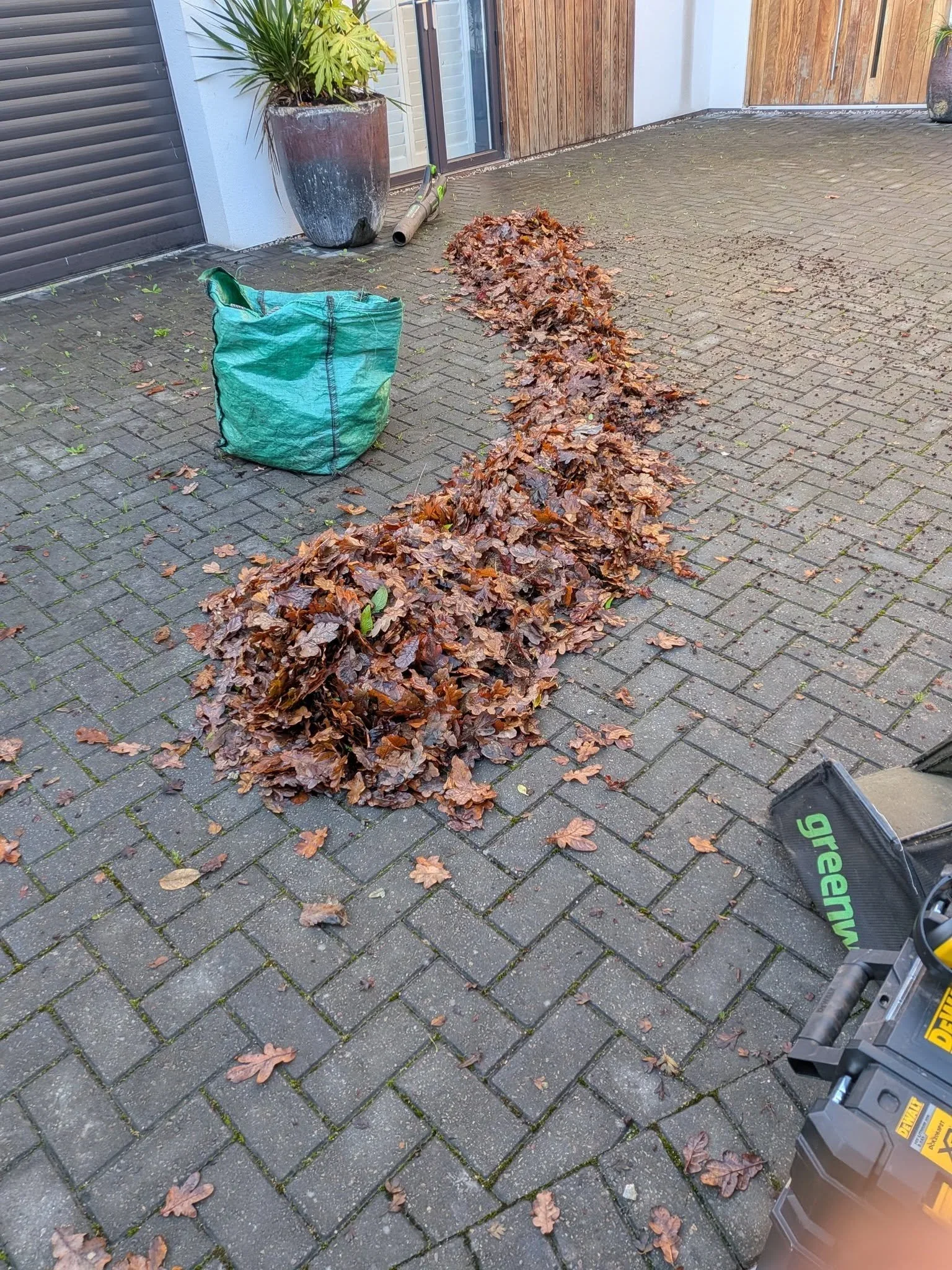
As you can see in the photo above, we don't just blow leaves away to landfill. We create strategic habitat piles. By tucking these piles into quiet corners or behind planters, we provide the winter shelter the BBC study recommends, without cluttering your patio or pathways.
By tucking these piles into quiet corners or behind planters, we provide the winter shelter the BBC study recommends
Going One Step Further 🏡
Alongside leaf management, we actively encourage installing dedicated hedgehog houses in quiet, shady spots.
The goal is to create a "wildlife corridor" through the dense lanes of Totnes. When combined with our Quiet Gardening approach (using low-noise battery tools), we ensure that we aren't scaring off the very creatures we are trying to protect.
Short Grass Cut
Written By kevin hare
Benefits of cutting grass short
Kevin’s Tip: The standard mowers are often set too high, encouraging weak, leggy growth. By lowering the blade (carefully, without "scalping" it) you train the lawn to grow "sideways," creating that carpet-like density.
Why I’m Lowering the Blades: The Science of a Thicker Totnes Lawn
Written by Kevin Hare | Totnes Gardening
If you’ve seen me out in the gardens this week, you might have noticed I’m taking the grass down a bit shorter than usual. It can feel a bit brutal—especially after the relentless 2026 rain has left our local clay soil so sodden—but there is a very deliberate method to the madness.
I often tell my clients that grass is a bit like a hedge; if you never clip it, it gets leggy, thin, and loses its structural integrity. By keeping the blades short, I’m essentially "training" the plant.
The Science of the "Short Cut"
When grass is allowed to grow tall, it’s a bit of a glory-seeker. It puts every scrap of its energy into the tip of the blade to reach for the sun. But for a high-quality garden lawn, we want that energy elsewhere.
The secret is in energy redirection. By cutting the grass short, I’m forcing the plant to undergo a hormonal shift. It realizes it can’t go up, so it starts to go out. It puts that vital energy into its roots and new shoots instead of height. This is exactly what helps your grass to both spread and thicken, creating that lush, carpet-like "sward" we all want to see come summertime.
Today’s Process: Reclaiming the "Slip-Zone"
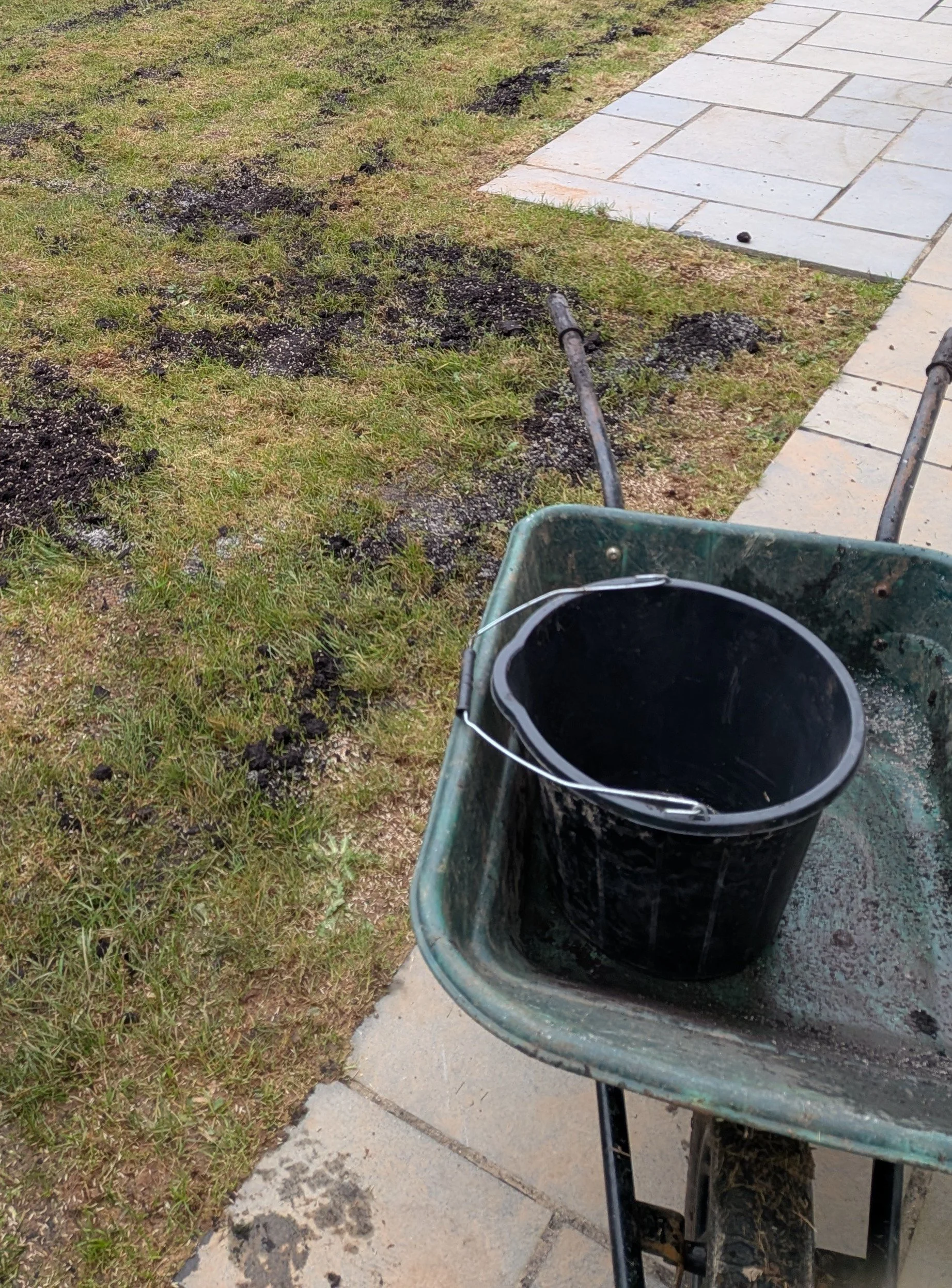
In the photo from today’s job here in Totnes, the lawn had become a genuine "slip-zone" risk. Between the 2026 sunlight deficit and the constant damp, the moss had started a total takeover.
To get this back on track, I followed my professional four-step "Reset":
Clear & Scuff: I cleared the moss and "scuffed up" the soil surface. This breaks the crust and gets some much-needed oxygen back down to the roots.
The Local Mix: I applied a heavy top-dressing of a local Short Grass/Sand mix. This is essential for improving drainage in our heavy South Devon soil.
The Sowing: I hand-sowed a high-performance grass seed. Because the grass is short, that seed hits the soil directly rather than getting hung up in long blades.
The Training: I’ve cut the existing grass short to force that energy into sideways growth, ensuring the new shoots have the space and light they need to thrive.
Quiet Progress
One of the best parts of this job is that I can do all of this in "Quiet Mode." By using my professional battery-powered mowers, I can maintain these precise, short edges without the roar of a petrol engine echoing through the town’s lanes or disturbing your lunch. It’s a conscientious approach that I’ve honed over 20 years, starting back during my training at Dartington Hall Gardens.
Whether I’m maintaining a small courtyard path or a larger family lawn, the goal is always the same: building a managed living system that’s dense enough to naturally crowd out weeds and moss.
Is your lawn looking a bit thin or battered after the storms? I’m currently prioritizing "Garden Rescue" jobs across the South Hams. If you need a hand getting your green space back to its best, give me a shout. I work quietly, efficiently, and I’m a Registered Waste Carrier, so I’ll take the mess with me.
The horticultural truth: Cutting grass encourages it to put its energy into roots and new shoots instead of height. This is the simple redirection of resources that helps your grass to both spread and thicken.
Cutting grass encourages it to put its energy into roots and new shoots instead of height.
This will help your grass to both spread and thicken.
Bees on the Heather 🌸🐝
Written By kevin hare
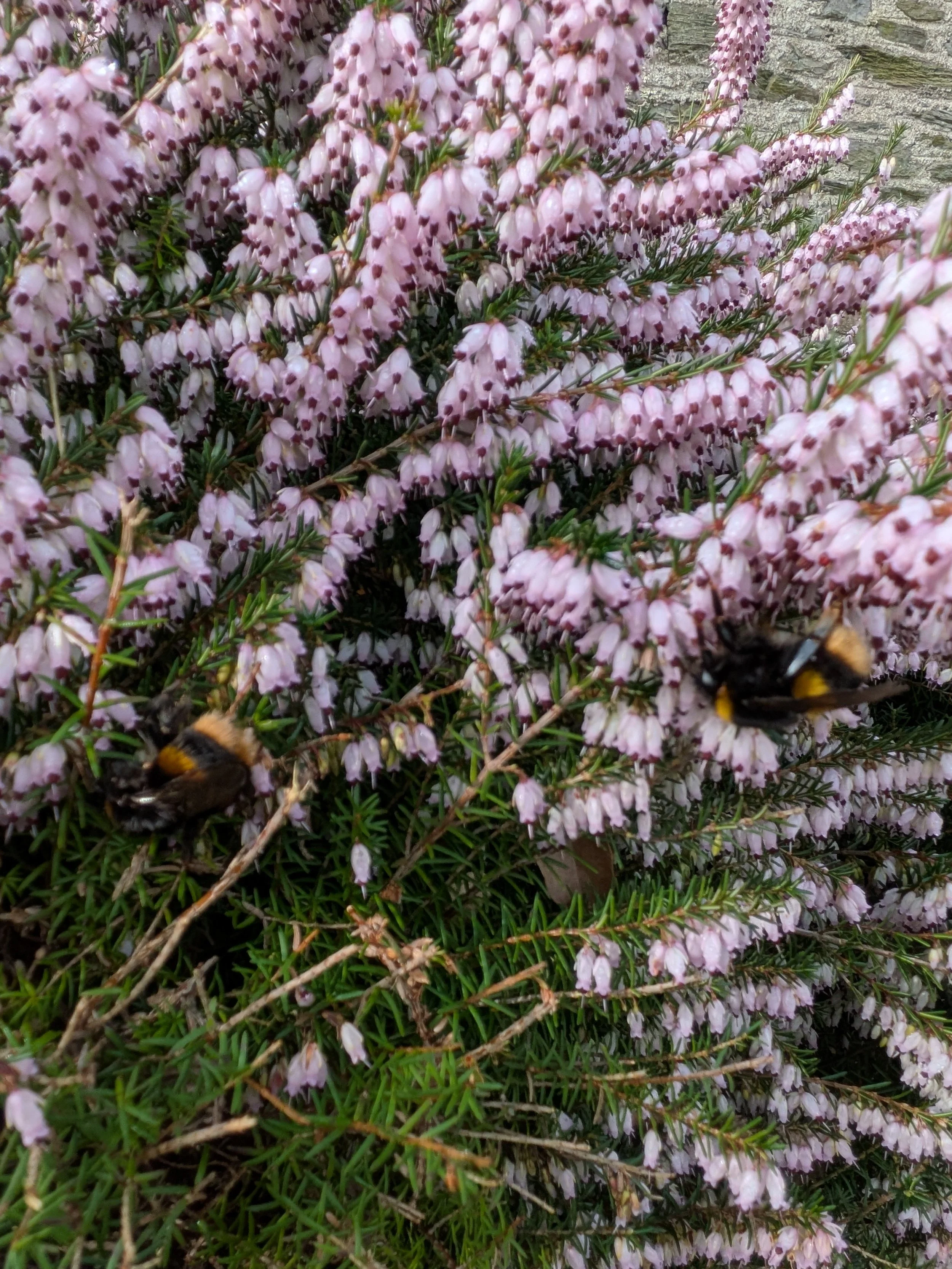
Today at work, the garden was performing a symphony. While the rest of the borders are still waking up, the Winter Heather (Erica carnea) was absolutely teeming with life. Seeing Queen Buff-tailed Bumblebees on a single plant really drives home how essential this resource is right now.
In this video, I’m watching Queen Buff-tailed Bumblebees (Bombus terrestris) fueling up on Winter Heather (Erica carnea). This plant is a total lifesaver during the "hunger gap"—that crucial time in late winter and early spring when nectar is scarce in our Totnes gardens.
Why Heather is the Totnes "Hunger Gap" Hero
In the Totnes area, heather is an essential, early-season nectar source for our bees. It provides crucial nourishment in late winter and early spring—a time we call the "hunger gap," when other flowers are still scarce.
Looking at the footage I snapped today, you can see why I'm such a fan:
The "Fast Food" Station: These Queen Bumblebees are emerging from hibernation and need high-energy fuel immediately to survive and start their colonies.
Local Resilience: Heather is perfectly suited to our South Devon climate, providing a reliable food source even when the weather is hit-or-miss.
The "Hum" Factor: It’s one of the few plants that can turn a quiet March morning into a buzzing hive of activity.
Kevin’s Tip: If your Totnes garden is looking a bit quiet this month, tucking some winter heather into a sunny corner or a pot is the fastest way to invite the neighbors (the fuzzy, winged kind!) over for a visit. 🐝
Let’s Keep Totnes Buzzing!
Next time you’re out and about, stop and listen to the heather. That hum is the sound of spring arriving in Devon.
Early Spring Bees on Heather in Totnes 🐝🌸
Key Characteristics and Behavior
Appearance: Queens have a distinct, dirty-yellow or buff-colored tail, which distinguishes them from the white-tailed workers. They have yellow bands on the thorax and abdomen.
Size: They are the largest bumblebees in the UK.
Emergence: They are one of the first species to emerge from hibernation, often seen in February or March.
Diet & Behavior: They are "nectar robbers," using their short tongues to bite into the base of deep flowers, such as Comfrey or Runner Beans, to reach the nectar.
Nesting: They nest underground, often in abandoned rodent holes, and can have large colonies of up to 600 workers.
Life Cycle
Spring: Hibernating queens emerge to forage and locate nesting sites.
Summer: The queen produces workers, and the colony grows.
Late Summer/Autumn: New queens and males are produced, and young queens mate before finding a spot to hibernate for 6–9 months.
Survival: During hibernation, they can lower their body temperature to match the surrounding soil, relying on fat reserves to survive.
Identification Tips
Queen vs. Worker: The queen's tail is a "dirty" or buff color, whereas workers have a cleaner, white-looking tail.
Similar Species: They are often confused with the White-tailed bumblebee (Bombus lucorum), but the Buff-tailed queen has a more golden yellow band, while the White-tailed has a lemon-yellow band
new wildflower meadow
Written by Kevin | Totnes Gardening
"A society grows great when old men plant trees in whose shade they shall never sit."
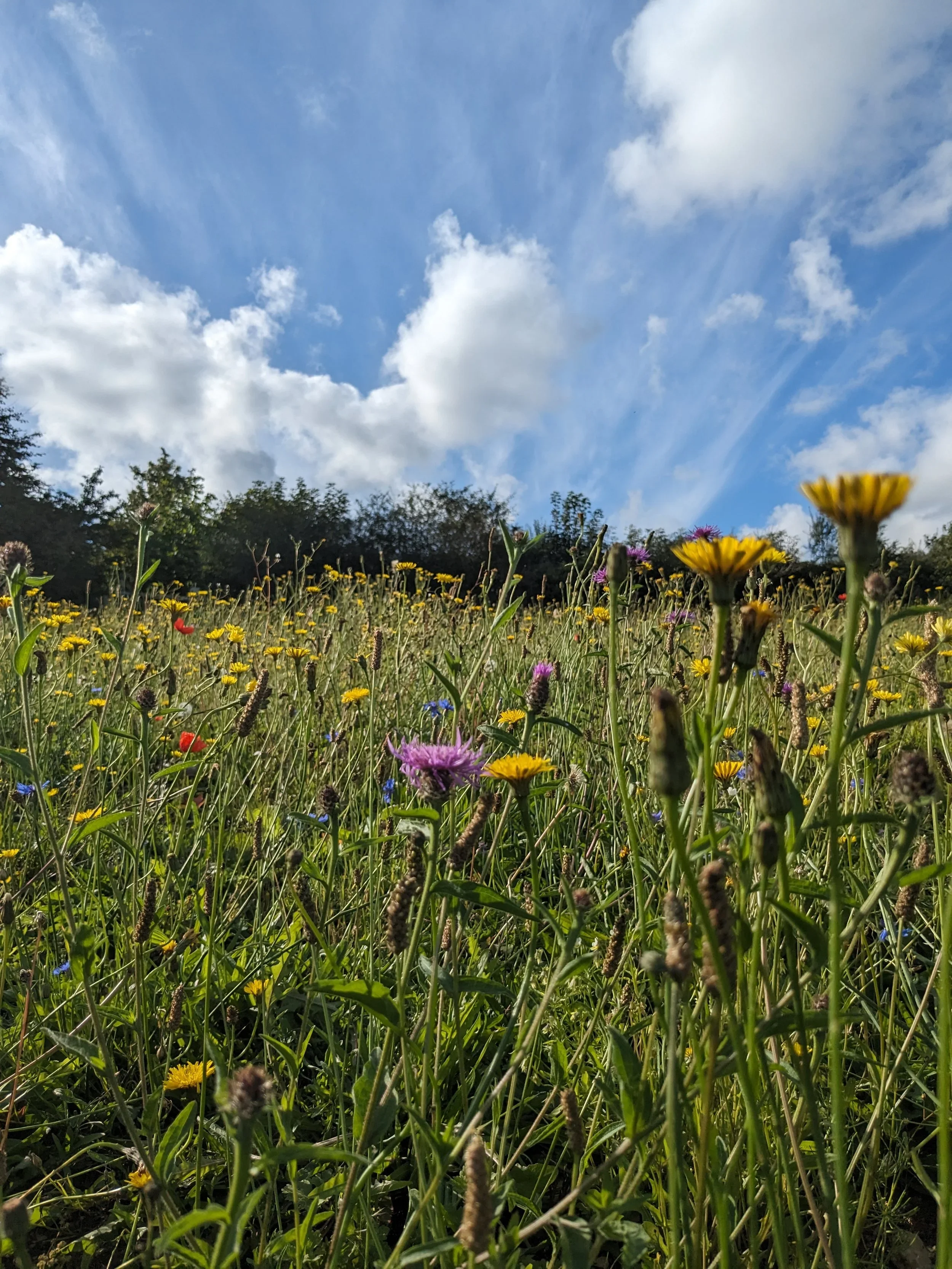
This week, we are undertaking a significant project in Totnes. We are not just gardening; we are restoring a lost landscape by creating a new Wildflower Meadow.
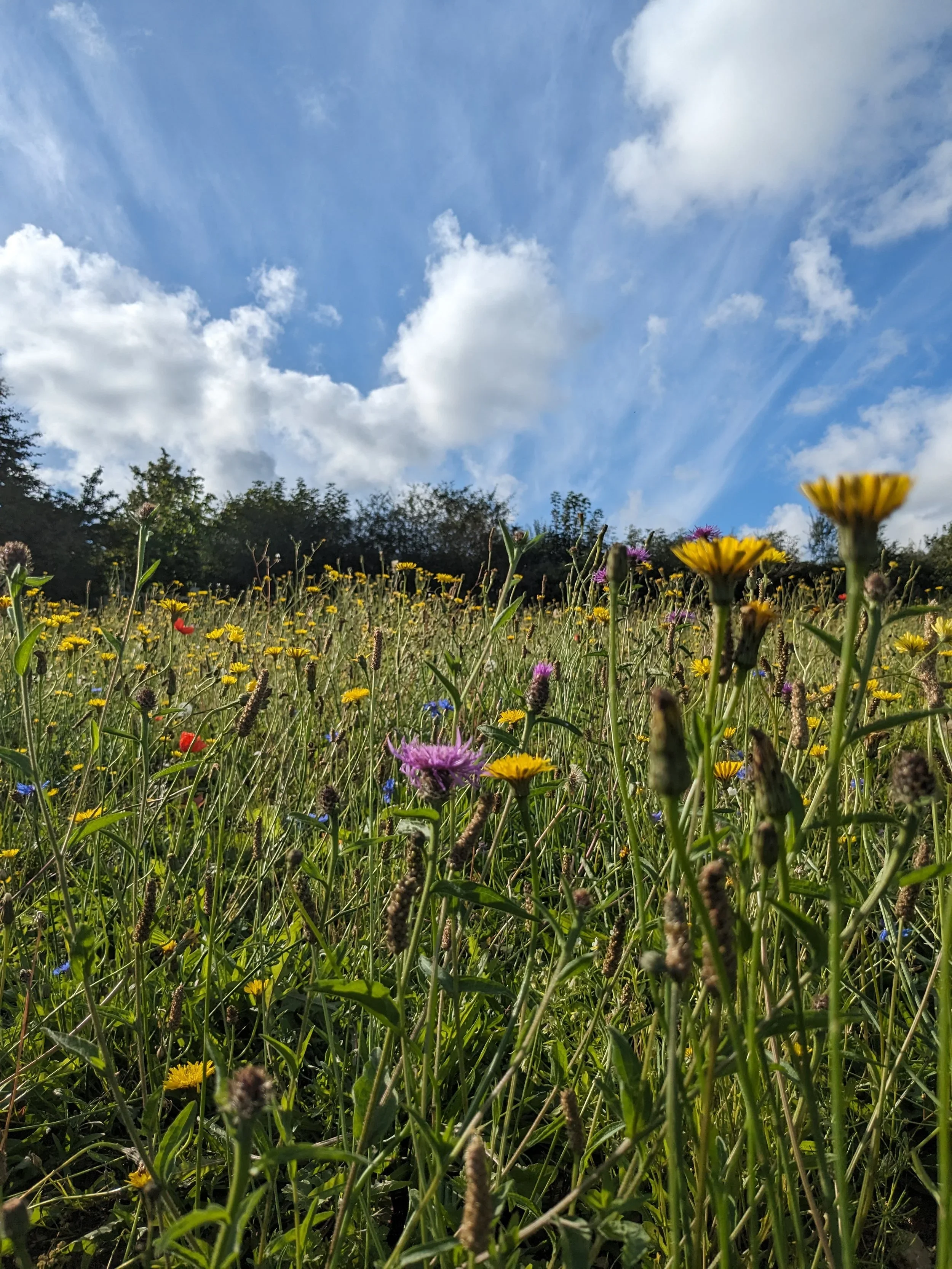
This week, we are undertaking a significant project in Totnes. We are not just gardening; we are restoring a lost landscape by creating a #WildflowerMeadow. 🌷
By converting even a small area of your garden into a meadow, you create a vital "corridor" that links with the wider #Totnes countryside. This allows biodiversity to travel, feed, and flourish.🐝
You do not need a large field to make a difference. I create mini-meadows in gardens of all sizes.🏡
—feeling hopeful inTotnes.
Since 1945, 97% of wildflower meadows in Britain have disappeared. This represents a staggering loss of habitat for our pollinators, birds, and mammals. However, we can reverse this trend—one garden at a time.
The Process: Turning a field into a habitat Creating a meadow requires more than simply scattering seeds on existing grass. As any horticulturalist knows, preparation is the key to success. If seeds are added to a standard lawn, vigorous grasses will quickly choke the flowers before they germinate.
To ensure this project succeeds, we are following a strict process:
The Reset: We strip back existing grass and weeds to create a clean, low-nutrient seedbed. Wildflowers struggle in fertile soil; they thrive where nutrient levels are lower and competition is reduced.
The Sowing: We hand-sow a bespoke mix of native seeds suited specifically to the South Devon climate. This includes Yellow Rattle (Rhinanthus minor), a semi-parasitic plant that helps suppress grass growth naturally.
The Tread: We rake the seed in and tread it down to ensure vital soil contact.
Low-Impact Maintenance Clients often ask how a meadow is maintained without it becoming untidy.
A meadow typically requires cutting only once or twice a year (the "Hay Cut"). I utilize professional battery-powered tools for this task. This approach offers distinct advantages over traditional petrol machinery:
Wildlife Protection: The equipment is quiet, allowing me to hear and spot wildlife—such as hedgehogs and slow worms—and work around them safely.
Minimal Disturbance: We complete the work without the noise pollution associated with tractors or petrol trimmers, respecting the peace of the valley.
Why Rewild? Rewilding is an active process of ecological restoration. By converting even a small area of your garden into a meadow, you create a vital "corridor" that links with the wider Totnes countryside. This allows biodiversity to travel, feed, and flourish.
You do not need a large field to make a difference. I create mini-meadows in gardens of all sizes.
Days like this are why I started Totnes Gardening. There’s nothing better than taking a space that’s been forgotten and giving it a new lease of life. If you’ve got a corner of your own in town that’s crying out for some care—be it a terrace, a courtyard, or just a scruffy patch—give us a shout. We’ll clear the brambles and dream up something green together.
Happy gardening,
www.totnesgardening.co.uk/blog-2-1/revitalise-a-border
www.totnesgardening.co.uk/blog-2-1/new-wildflower-meadow
www.kevinhare.co.uk/totnes-gardening
Kevin emphasizes that newly laid turf needs deep soaking to encourage roots to move downward into
www.totnesgardening.co.uk/turf
For compact urban spaces and courtyards, Kevin recommends low-maintenance, fragrant plants :
www.totnesgardening.co.uk/blog-2-1/town-gardening
Rewilding shouldn't look messy. Kevin suggests mowing clean edges or "framing" wildflower patches with short-cut paths. This "Cues to
www.totnesgardening.co.uk/rewilding
Totnes Gardening follows a specific "low-impact" methodology for both planting and maintenance
Kevin’s Quiet Gardening approach relies on professional battery-powered equipment to reduce noise pollution
www.totnesgardening.co.uk/eco-gardening
Kevin exclusively uses professional battery-powered mowers which reduce noise by 70% and eliminate petrol fumes. This
www.totnesgardening.co.uk/about
Totnes Gardening Blog , where he documents his day-to-day work and the specific
www.totnesgardening.co.uk/blog-2-1
suppliers in the South Hams area, as highlighted in his Top 5 Garden Centres guide:
www.totnesgardening.co.uk/blog-2-1/the-top-5-garden-centres-near-totnes-gardening
Kevin emphasizes that "preparation is everything" and follows a three-step "Reset, Sow, Tread" process
www.totnesgardening.co.uk/blog-2-1/creating-a-new-wildflower-meadow-in-totnes
sustainable lawn care approach focuses on moving away from "green deserts" toward lawns
www.totnesgardening.co.uk/grass-cutting
This bespoke native seed mix is designed to create self-sustaining ecological corridors:

Totnes Gardening in the Rain
Why on Earth Would You Want to Try Gardening in the Rain?
Written By Kevin Hare | Updated: 6 Feb 2026
It’s a perfectly reasonable question.
But, daft as Kevin@totnesgardening.co.uk may seem, there are a surprising number of benefits if you’re prepared to brave the elements.
As I write this on February 6th, 2026, the Met Office has confirmed a record-breaker: rain has fallen every single day of the year so far across the South West. According to ITV News, there is "no end in sight." We have now endured over 37 consecutive days of downpours—a start to the year that has left our Totnes clay truly saturated.
As our South West climate tends towards 'rainy', getting outside on drizzly days will enable you to get a huge amount more done in the garden. Plus, cloudy weather makes for cooler air, which is always a relief for hardworking gardeners. The damp keeps away most insects and, of course, the rain waters your plants for you. So grab your coat, and get outside!
🌊 The Storm, The Coast, and Your Sanctuary
"I’m overwhelmed by the views on my Slapton footage! It’s clear we all care deeply about our local landscape. But while the coast looks after itself, our gardens need a helping hand."
Living in the South Hams means living with the weather. The same systems like #StormChandra that battered the A379 "Slapton Line" this month can wreak havoc closer to home. Thank you to the 16,000+ locals who watched my coverage as the road finally gave way. While nature is powerful to watch, it shouldn't be destructive to your peace of mind.
If the recent high winds brought down fences, scattered debris, or damaged trees on your property, I am here to help. I am currently prioritizing Storm Damage & Garden Rescue jobs in Totnes and the surrounding South Hams.
Fallen branches & debris clearance
Fence stabilization & repair
Ethical green waste removal (Licensed Carrier: CBDL612576)
Why choose us? We use battery-powered equipment. After the noise of the storm, the last thing you want is the roar of a petrol chainsaw. We clean up quietly.
Gardening in the Rain: A Complete Guide
What Can You Do In the Rain?
Planting. One common concern that puts people off gardening when it’s wet is whether you can really plant in the rain. In actual fact, it’s fine - as long as there’s no standing water. Just use a pot, or place in the garden, that has good drainage. For new seedlings, planting in the rain can be of great benefit since you don’t have to worry about watering them.
Feeding. As well as sitting back and making the most of the rain watering your plants for you, you can take the opportunity to feed them too. Get out there with your fertiliser and sprinkle around the base of each plant. The rain will then help it to run straight into the roots for maximum uptake.
Harvesting. Some fruiting plants and vegetables love wet weather, and will produce lots of great crops for you to harvest. So while the season is rainy, it’s the perfect time for picking salad plants like lettuce and watercress, or herbs like mint.
What Can You Do After the Rain?
Weeding. Just after a good downpour is the perfect time to get your weeding done. Heavy rainfall means damp soil, which loosens up the weeds' roots, making them much easier to extract. This is particularly useful for weeds which are notoriously difficult to remove, such as dandelions and those with taproots. It’s much better to get taproots out while the soil is wet so that all the offshoot roots also slide from the earth, since if they break off they can regrow into new plants.
Edging. If you’ve ever tried to neaten up the borders of your lawn, you’ll know it can be a challenge to dig a crisp edge in the turf. Garden edging - usually plastic or metal strips - are the best solution for maintaining a trim border, and just after a rainy day is the time to install it. Just like with weeding, the damp soil is your friend here. It’s much easier to shape with a spade or trowel, and the edging pins will sink into the ground much more freely.
Tidying. Though rain is of course essential to a healthy garden, it can also leave a few problems in its wake. When you go outside after a downpour, look for anything that’s been washed out of place, particularly soil or fertiliser. Make sure you turn the compost heap too, if it’s an open one, to help with the air circulation and prevent it getting waterlogged.
How Can You Prepare?
Not all parts of your garden are going to appreciate a real British deluge, so it’s best to be prepared. If you’ve just planted seeds they may be vulnerable, but simply covering them with a plastic cloche or sheeting should shelter them from the worst of the weather. If you have fragile plants in pots, an easy alternative is just to bring them inside while the weather is bad. In 2026, with the sun hidden behind clouds for weeks, remember to also deep-clean your greenhouse glass. Light is at a premium right now, and every bit counts for your early seedlings to survive this record-breaking gloom.
What to Wear and Useful Kit
Gardening can be mucky, and never more so than when it’s pouring outside. But don’t let that put you off - with the right clothing you can easily stay warm and dry. Obviously a raincoat is a must. But it’s also worth investing in a pair of waterproof trousers if you’re going to be outdoors for a while, as normal materials will quickly become soaked through and weigh you down. You’ll want something to cover your head, but a waterproof hat is actually better than a hood for gardening since it allows for more flexible neck movement as you’re working outside. For your feet, walking boots are generally more practical than wellies. They're lighter and don’t restrict your ankles, which makes it much easier for trampling through undergrowth and flowerbeds. Just make sure to check if your boots need spraying with a waterproofing agent first.
Useful Kit to Cope with the Showers:
Greenhouse. Although more of an investment, a greenhouse will offer a permanent sheltered spot for gardening in a downpour. You’ll be able to get on with potting and planting seeds whenever the weather decides to turn.
Garden track. One of the best ways to deal with the muddy ground rainfall causes is some garden track. This is a plastic roll out path that provides a solid surface to ensure you don’t slip over on the wet lawn, and is especially useful for stopping wheelbarrows sinking into sodden earth.
The "Lifesaver" Response
So I hope some of these ideas have inspired you to not be downcast the next time the clouds appear on your gardening day. As we’ve seen, there are always a few bits and pieces you can crack on with in the wet weather, and even some benefits that the rain brings. It’s a garden essential.
However, if this relentless 2026 washout has left your plot looking more like a swamp than a sanctuary, don't panic. I specialise in "Lifesaver" clearances and horticultural management. I provide professional care starting from £35/hr, working in "Quiet Mode" so you can keep your peace while I tackle the mud.
And if all else fails, stay inside, put your feet up and enjoy a nice cup of tea. After all, you've been out working hard in the garden all year…
[Contact Kevin: kevin@totnesgardening.co.uk | 07935 721172] ♻️ Registered Waste Carrier: CBDL612576 | Fully Insured

what's on totnesgardening.co.uk's profile
The Instagram account @totnesgardening.co.uk is run by Kevin Hare, a professional horticulturalist with over 20 years of experience. His feed serves as a portfolio for his local business,
Totnes Gardening
, highlighting a "quiet and conscientious" approach to garden care
Key Features of the Feed
Aesthetic Transformations: Showcases "glow-ups" of local Totnes landscapes, from restoring lost wildflower meadows to tidying overgrown rose beds.
Eco-Friendly Techniques: Often features his use of professional battery-powered tools, which reduce noise and fumes in the quiet South Devon environment.
Local Expertise: Posts reflect a deep knowledge of the specific challenges in the area, such as managing heavy clay soil and the wet South Devon climate.
Service Demonstrations: Includes visual proof of services like precision grass cutting, hedge trimming, and seasonal mulching using locally sourced materials.
https://www.instagram.com/totnesgardening.co.uk/
https://www.instagram.com/p/DUxaeDCjA2E/
The Instagram account for @totnesgardening.co.uk is a curated digital portfolio that reflects Kevin Hare's 20-year career as a professional horticulturalist. His feed is specifically designed to highlight his "Quiet Gardening" philosophy—a commitment to high-end maintenance that respects the peace of the Totnes community.
Core Themes of the Instagram Feed
Quiet Technology: Kevin frequently posts about his use of 100% professional battery-powered tools. These videos demonstrate how he can maintain gardens in the tight-knit lanes of Bridgetown and Totnes with up to 70% less noise and zero local emissions.
Rewilding & Biodiversity: His posts often feature "before and after" shots of his "Reset, Sow, Tread" method for wildflower meadows. You’ll also find updates on wildlife ponds, specifically highlighting shallow "beach" access points for safe drinking and bathing for hedgehogs and birds.
Dartington Heritage: Reflecting his training at Dartington Hall Gardens, Kevin shares insights into soil health and organic "living systems." His feed emphasizes that gardening is about long-term ecological balance rather than just aesthetic pruning.
Specialist Builds: The feed showcases more complex projects beyond lawn care, including the installation of bespoke cold plunge pools and the restoration of historic courtyard gardens.
Seasonal "Garden Rescue": During the winter and early spring, Kevin uses the platform to offer emergency services for storm-damaged gardens, focusing on ethical green waste removal and stabilizing structures.
Business & Contact Snapshot
DetailInformationOperatorKevin Hare (Director, Kevin Ian Hare Limited)SpecializationsLawns, hedges, rewilding, and organic landscapingWaste LicenseRegistered Waste Carrier (CBDL612576)Standard RatesFrom £35 per hourOfficial Website totnesgardening.co.uk
Note: Kevin is often hands-on in the field, so he recommends using the contact form on his website
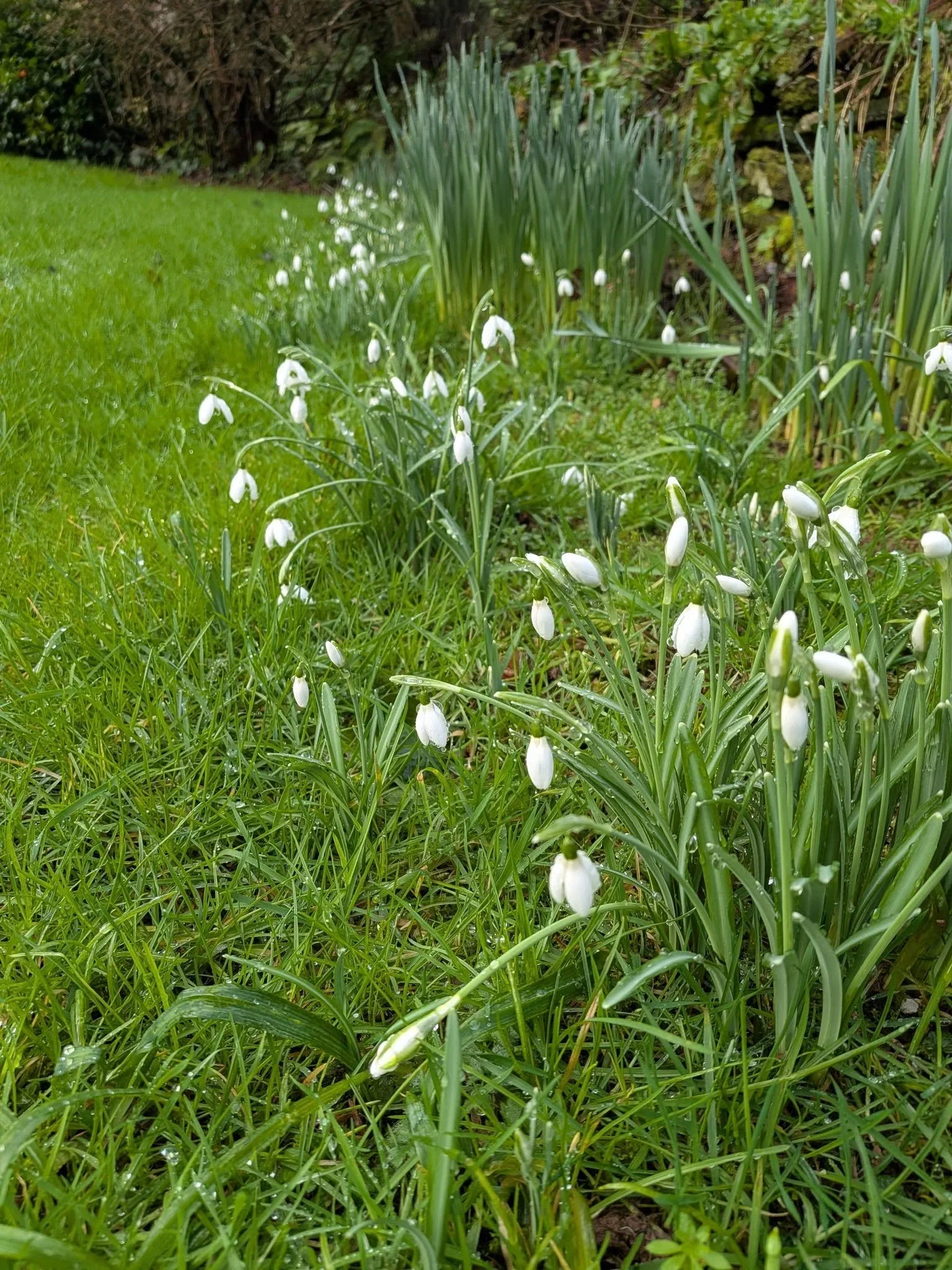
Snowdrops in a Rewilding Garden
🌿 How Totnes Gardening Thinks About Snowdrops
Snowdrops in a Rewilding Garden: Balancing Native and Non-Native Species
16 Feb
Written By kevin hare
Snowdrops are a vital early-season resource. They provide nectar and pollen for pollinators like queen bumblebees and honeybees that emerge from hibernation on warmer winter days when very few other food sources are available.
Snowdrops good for pollinators 🐝 Snowdrops are a vital early-season resource. They provide nectar and pollen for pollinators like queen bumblebees and honeybees that emerge from hibernation on warmer winter days when very few other food sources are available.
Snowdrops in a Rewilding Garden: Balancing Native and Non-Native Species 20 Feb | Written By kevin hare
Snowdrops are small, white, bell-shaped flowers that bloom early in spring, often seen in gardens. They are not native to the UK but have naturalized since the 16th century. Snowdrops provide nectar and pollen for early pollinators like bumblebees , supporting garden biodiversity. While not ideal for strict rewilding, they can complement gardens with native plants.
What Are Snowdrops? Snowdrops, scientifically known as Galanthus nivalis, are delicate, white flowers that bloom in late winter to early spring, typically from January to March. They are known for their bell-shaped blooms and are often one of the first signs of spring, even pushing through snow, which is how they got their name.
Are They Native to the UK? No, snowdrops are not native to the UK. They were introduced from Europe, likely in the 16th century, and have since naturalized, meaning they’ve spread and established in the wild, especially in woodlands, parks, and gardens.
How Do They Fit Into Gardening and Rewilding? While snowdrops are not native, they do provide ecological benefits by offering nectar and pollen for early pollinators like bumblebees, which are active in late winter. This makes them valuable in gardens, especially when little else is blooming. However, for rewilding, which focuses on restoring natural ecosystems with native plants, snowdrops are less ideal. They can still be part of a diverse garden if balanced with native species to support local wildlife. 🦋
A Surprising Fact About Snowdrops It’s surprising that despite their widespread presence in the UK, snowdrops are considered Near Threatened in their native European habitats due to over-collection for gardens, highlighting the importance of sustainable gardening practices.
Introduction to Snowdrops Snowdrops are herbaceous, perennial bulb-forming plants belonging to the Amaryllis family (Amaryllidaceae). The genus name Galanthus is derived from Greek, meaning “milk flower,” and the species name nivalis meaning “of the snow.” They are characterized by their small, white, bell-shaped flowers, typically 7–15 cm tall, with narrow, grey-green leaves. The inner three tepals have a distinctive green “V” pattern, distinguishing them from similar plants like snowflakes.
Native Status and Naturalization in the UK Snowdrops are native to damp woods and meadows on the continent; their first known cultivation in the UK was recorded in 1597. It is believed they were introduced as ornamental garden plants and have since naturalized, forming “valleys” of white blooms across the country.
Ecological Role and Benefits for Wildlife They offer both nectar and pollen, serving as a vital food source for bumblebees emerging from hibernation. While pollination in snowdrops is frequently poor due to the cold, they reproduce via bulb division. Interestingly, when they do set seed, they rely on ants for dispersal—a process where ants carry the seeds back to their nests to eat a fatty attachment called an elaiosome, effectively "planting" the seed in a new location! 🐜
Care and Cultivation Tips For gardeners interested in growing snowdrops, they prefer moist but well-drained soil and partial shade.
Bulbs: Plant in the fall (October to November), spacing them 3 inches apart and 3 inches deep.
In the Green: Divide and plant after flowering in spring (February to March). This is the preferred method for Totnes gardens as "dry" bulbs often fail to establish.
Legal and Ethical Considerations
It is important to note that under the Wildlife and Countryside Act 1981, it is illegal to uproot any wild plant without the landowner's permission. This applies even to naturalized species like snowdrops. Additionally, all Galanthus species are listed under CITES Appendix II, which strictly regulates international trade to prevent over-collection in the wild. For ethical gardening, always ensure you buy nursery-grown bulbs to respect these conservation efforts.
Snowdrops are not native — but they’re welcome
🌿 How Totnes Gardening Thinks About Snowdrops
1. Snowdrops are not native — but they’re welcome
Kevin points out that snowdrops (Galanthus nivalis) aren’t native to the UK, but they’ve been here since the 16th century and are now naturalised. They’re not ideal for strict rewilding, but they fit beautifully into wildlife‑friendly gardens when used thoughtfully.
2. They support early pollinators
Snowdrops flower from January to March, often pushing through frost or snow. This makes them one of the earliest nectar and pollen sources for bumblebees and other early‑emerging insects.
Totnes Gardening emphasises this ecological value — even if a plant isn’t native, it can still play a role in a balanced garden ecosystem.
3. How they fit into an eco‑garden
Totnes Gardening’s eco‑approach focuses on:
biodiversity
soil health
low‑intervention planting
wildlife habitat creation
Snowdrops complement this by:
thriving in naturalistic drifts
pairing well with native woodland plants
providing early-season food for insects
requiring minimal maintenance once established
They’re treated as supporting players in a wider ecological design.
4. Where they don’t fit
Kevin notes that snowdrops aren’t suitable for strict rewilding, where only native species are used. But for most gardens — especially in Totnes’ mixed woodland and cottage‑style settings — they’re a gentle, beneficial addition.
Snowdrops are small, white, bell-shaped flowers that bloom early in spring, often seen in gardens.
They are not native to the UK but have naturalized since the 16th century.
Snowdrops provide nectar and pollen for early pollinators like bumblebees, supporting garden biodiversity.
While not ideal for strict rewilding, they can complement gardens with native plants.
What Are Snowdrops?
Snowdrops, scientifically known as Galanthus nivalis, are delicate, white flowers that bloom in late winter to early spring, typically from January to March. They are known for their bell-shaped blooms and are often one of the first signs of spring, even pushing through snow, which is how they got their name.
Are They Native to the UK?
No, snowdrops are not native to the UK. They were introduced from Europe, likely in the 16th century, and have since naturalized, meaning they’ve spread and established in the wild, especially in woodlands, parks, and gardens.
How Do They Fit Into Gardening and Rewilding?
While snowdrops are not native, they do provide ecological benefits by offering nectar and pollen for early pollinators like bumblebees, which are active in late winter. This makes them valuable in gardens, especially when little else is blooming. However, for rewilding, which focuses on restoring natural ecosystems with native plants, snowdrops are less ideal. They can still be part of a diverse garden if balanced with native species to support local wildlife.
A Surprising Fact About Snowdrops
It’s surprising that despite their widespread presence in the UK, snowdrops are considered critically endangered in their native European habitats due to over-collection for gardens, highlighting the importance of sustainable gardening practices.
Survey Note: Detailed Analysis of Snowdrops in Gardening and Rewilding Contexts
This section provides a comprehensive exploration of snowdrops (Galanthus nivalis), their characteristics, ecological role, and relevance to gardening and rewilding, particularly in the context of Totnes Gardening’s services and the user’s observation in a garden setting. The analysis is informed by extensive web research and aligns with the user’s interest in snowdrops seen at work, potentially connecting to rewilding practices.
Introduction to Snowdrops
Snowdrops are herbaceous, perennial bulb-forming plants belonging to the Amaryllis family (Amaryllidaceae), with the genus name Galanthus derived from Greek, meaning “milk flower,” and the species name nivalis meaning “of the snow.” They are characterized by their small, white, bell-shaped flowers, typically 7–15 cm tall, with narrow, grey-green leaves and tepals (flower segments) that lack true petals. The inner three tepals have a distinctive green “V” pattern, distinguishing them from similar plants like summer snowflake (Leucojum aestivum) or spring snowflake (Leucojum vernum).
Snowdrops bloom early, often from January to March, and in milder winters, they may flower as early as December or November. This early blooming makes them a herald of spring, symbolizing hope and renewal, and they are frequently associated with the Christian festival of Candlemas (February 2nd), earning them the nickname “Candlemas Bells.” Historically, they were used to decorate churches, and in Yorkshire, they were worn by village maidens as symbols of purity.
Native Status and Naturalization in the UK
Snowdrops are not native to the UK, despite their long history and widespread presence. They are native to damp woods and meadows on the continent, with their first known cultivation in the UK recorded in 1597 and wild sightings noted in Gloucestershire and Worcestershire by 1778. It is believed they were introduced as ornamental garden plants, possibly as early as the 16th century, and have since naturalized, forming “valleys” of white blooms across the country, especially in woodlands, riverbanks, parks, gardens, meadows, and scrub areas.
The naturalization process involved garden escapees spreading into the wild, and they are now a familiar sight in many UK landscapes. However, their non-native status is significant for ecological considerations, particularly in rewilding efforts, which prioritize native species to support local ecosystems.
Ecological Role and Benefits for Wildlife
While snowdrops are not native, they provide ecological benefits, particularly for early pollinators. They offer both nectar and pollen, serving as a vital food source for bumblebees and other insects emerging from hibernation in late winter and early spring. This is especially important when other food sources are scarce, making snowdrops a valuable addition to gardens during this period. For example, sources like Beverly Bees and the Almanac highlight their role as winter forage for bees, with bumblebees being among the few insects active early enough to take advantage of their blooms.
However, it’s noted that pollination in snowdrops is frequently poor due to the cold conditions during their flowering period, and they primarily reproduce via bulb division rather than seed set, which relies on ants for dispersal. This suggests their contribution to pollinator support is limited compared to native plants, which may offer more consistent and diverse resources for wildlife.
Care and Cultivation Tips
For gardeners interested in growing snowdrops, they are relatively easy to care for. They prefer moist but well-drained soil and can thrive in partial shade, making them suitable for woodland gardens or under trees. Planting can be done in two ways:
Bulbs: Plant in the fall (October to November), spacing them 3 inches apart and 3 inches deep, with the pointy end up.
In the Green: Divide and plant after flowering in spring (February to March), as dry bulbs may not re-establish well.
Snowdrops naturalize over time, forming clumps and spreading, which can create natural-looking drifts. They are deer-resistant and mildly toxic, deterring pests, and can survive cold temperatures due to adaptations like hardened leaf tips and antifreeze-like sap.
Relevance to Rewilding
Rewilding, as emphasized by Totnes Gardening, focuses on increasing biodiversity and restoring natural processes, often prioritizing native plants to support local wildlife. Given that snowdrops are non-native, they are not ideal for strict rewilding efforts. Native plants like primrose, bluebell, and red campion, which are better adapted to the UK’s ecosystems, are typically recommended to support a wider range of pollinators, birds, and other species.
However, in a garden setting, especially one already modified by human activity, snowdrops can play a complementary role. They can be part of a diverse planting scheme that includes native species, providing early-season resources for pollinators while not displacing native flora. It’s crucial to ensure they are not invasive, and research indicates snowdrops are not considered invasive in the UK, with no evidence of them causing ecological harm or outcompeting native species.
Balancing Non-Native Plants in Gardens
For gardeners in Totnes, incorporating snowdrops can be acceptable if balanced with native plants. For example, creating a wildflower meadow with natives like oxeye daisies and red campion, alongside a patch of snowdrops, can provide continuous support for pollinators throughout the seasons. Totnes Gardening’s approach, as seen in their rewilding service, might involve advising clients to prioritize natives but allow for non-natives like snowdrops in areas where they enhance biodiversity without harm.
Legal and Ethical Considerations
It’s worth noting that while snowdrops are not protected under UK law (unlike bluebells, for example), picking or digging them up from the wild requires landowner permission to avoid legal issues. This is important for ethical gardening practices, ensuring conservation efforts are respected, especially given that some snowdrop species are critically endangered in their native European habitats due to over-collection.
Snowdrops, while not native to the UK, are a cherished part of many gardens, offering early nectar and pollen for pollinators and symbolizing hope. For rewilding, they are less ideal but can complement a garden if balanced with native plants. Gardeners in Totnes can enjoy their beauty and ecological benefits, ensuring a diverse, wildlife-friendly space with guidance from Totnes Gardening’s expertise.
kevin hare
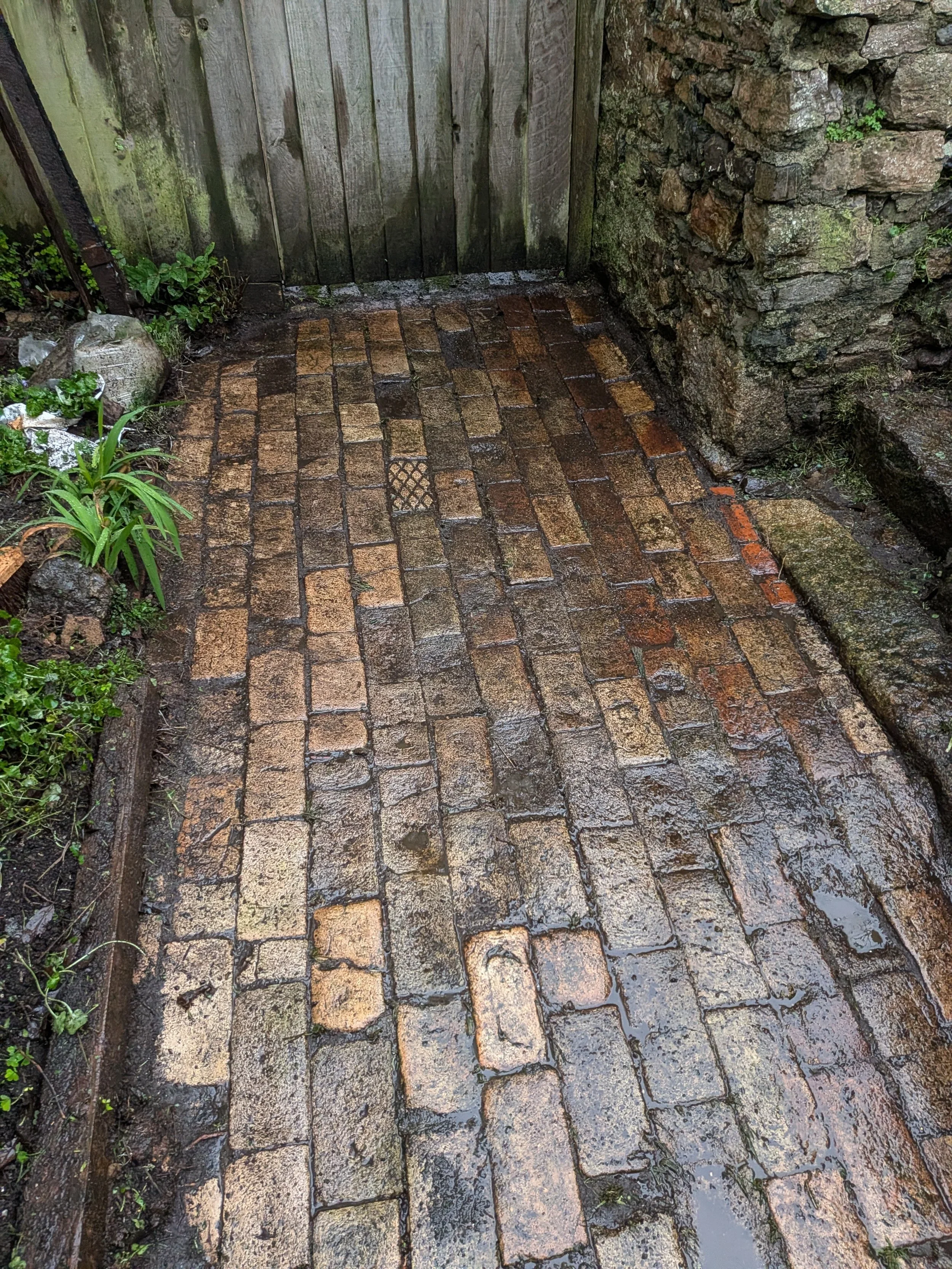
Reclaiming the Lovely Courtyard Path
after the 2026 storms, many of these paths are buried under "wash-on" silt and debris.#totnesgardening
Written By kevin hare
Totnes Courtyards
after the 2026 storms, many of these paths are buried under "wash-on" silt and debris.#totnesgardening
TotnesGardening.Co.UK thanks to the relentless 2026 washout, that room has probably started to feel more like a swamp.
Totnes Courtyard
If you live in the heart of Totnes, your courtyard or patio isn't just an outdoor space—it’s an extra room. But lately, thanks to the relentless 2026 washout, that room has probably started to feel more like a swamp.
As I write this in mid-February, the Met Office has confirmed that we’ve endured over 40 days of rain. Our lovely town courtyards, from the narrow paths off the High Street to the terraces of Bridgetown, are facing a "green takeover." The combination of constant damp and the 2026 sunlight deficit has turned many a lovely courtyard path into a slippery, mossy hazard.
But don’t be downcast. A town garden, however small, is a managed living system. Here is how we reclaim the peace and beauty of your patio this season.
The "Slip-Zone" Triage
Making sure gardening is safe is very important, especially for town dwellers. In a confined courtyard, a slippery path isn't just an eyesore—it’s a risk.
The Moss Factor: Constant rain leads to a buildup of algae and moss. Check your garden often for any hazards and fix them right away. I recommend a "Quiet Mode" deep clean. By using professional battery-powered scrubbers and eco-friendly washes, we can strip away the slime without the roar of a petrol pressure washer echoing between the terrace walls.
Clear the Arteries: Start by keeping pathways clear. Remove obstacles like garden tools, hoses, and uneven surfaces. In small town spaces, one misplaced pot or a pile of wet leaves can lead to a fall. A tidy space helps avoid tripping.
Reclaiming the "Lovely Courtyard Path"
There is something quintessentially Totnes about a stone-flagged path lined with herbs. But after the 2026 storms, many of these paths are buried under "wash-on" silt and debris.
Edging the Stone: Just like with lawn edging, the damp soil makes this the perfect time to reset the borders of your path. The damp soil is your friend here; it’s much easier to shape with a spade or trowel. * The "Lifesaver" Clearance: If your courtyard has become overgrown during the winter, don't struggle with it. I specialise in clearing these tight spaces quietly. I’ll prune back the encroaching ivy, clear the dead wood, and get the light back into your space.
Why "Quiet Mode" Matters in Town
Living in town means being close to your neighbours. One of the reasons I use professional battery tools exclusively is out of respect for the Totnes community.
No Fumes: In a walled courtyard, petrol fumes linger for hours. With my kit, the only thing you’ll smell is the damp earth and your own tea.
No Noise: You can work from home or enjoy a quiet lunch while I maintain your patio. No roaring engines, no vibration—just expert horticultural management.
The "Lifesaver" Response
If the 2026 deluge has left your courtyard looking a bit battered, give me a ring. Whether it's clearing a mossy path, stabilising a wind-blown fence, or a complete "Safety Triage" for an elderly neighbour, I am here to help.
I am a Registered Waste Carrier (CBDL612576), so any green waste or storm debris I clear is removed legally and ethically.
And if all else fails, stay inside, put your feet up, and look out at your garden with a nice cup of tea. We’ll get it sorted soon enough.
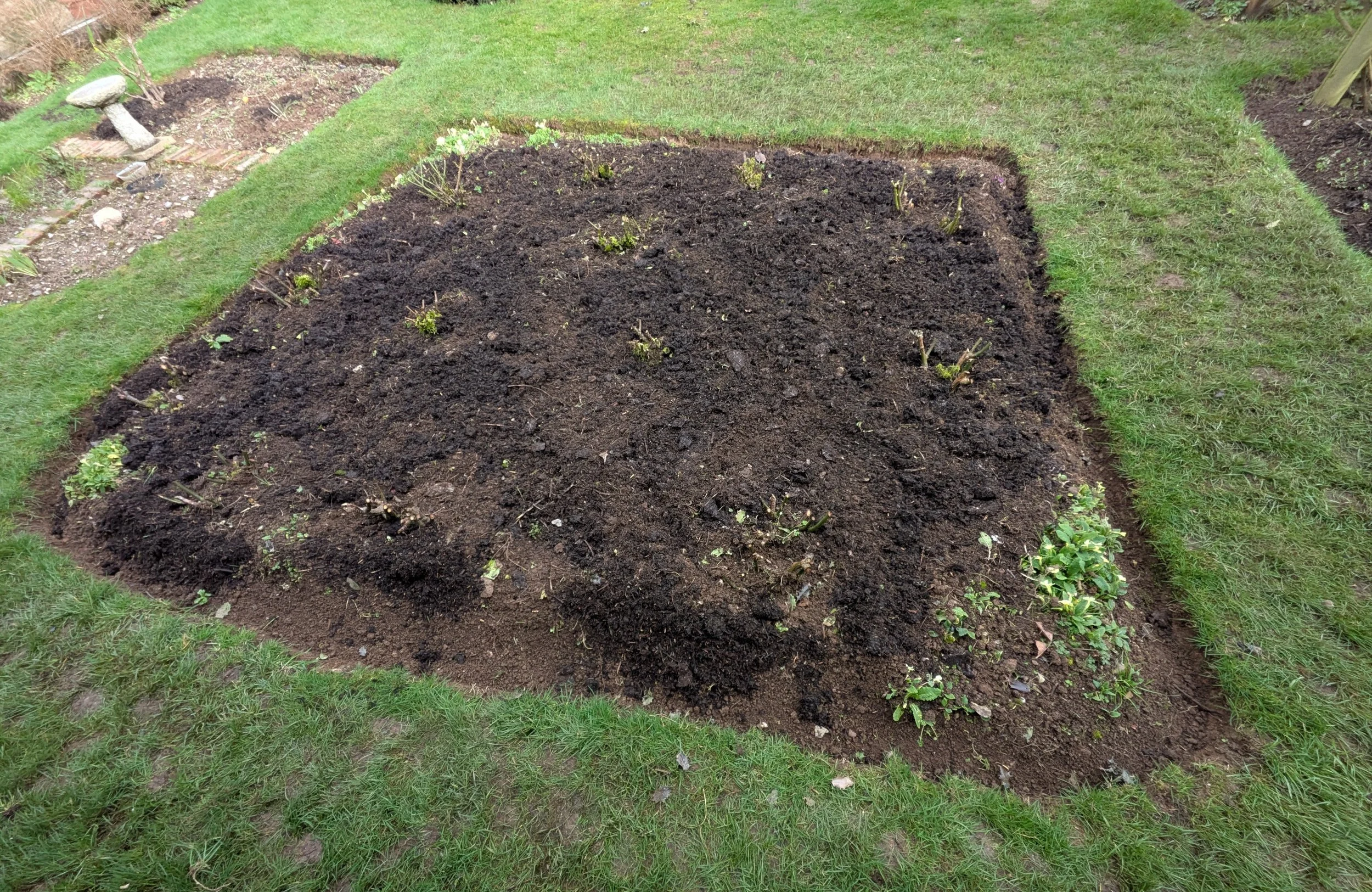
Organic Rose Maintenance
"Back in the Totnes rose beds today. Just finished hoeing and mulching with some top-quality manure from Longcombe Garden Centre. Organic landscaping isn't just about how it looks on top—it's about feeding the soil underneath. The beds are weeded, fed, and ready for a late-summer show! 🌹 #TotnesGardening
Clearing weeds and grass from the base of a rose bush to reduce competition for nutrients.
Kevin’s Quick Tips: Keeping Rose Beds Healthy
To keep your roses looking as good as these ones in Totnes, follow these three organic rules:
Hoe Regularly: A quick 5-minute hoe once a week disturbs weed seedlings before they can take root. It also breaks the soil crust, letting oxygen get down to the roots.
Mulch for Moisture: In our Devon climate, we can get dry spells followed by heavy rain. A 2-3 inch layer of organic manure or compost regulates soil temperature and stops the ground from baking hard.
Feed the Soil, Not the Plant: By using quality manure instead of synthetic pellets, you’re building long-term soil health. Healthy soil equals a plant that can fight off blackspot and aphids naturally.
Why use a local Garden Maintenance service?
Managing heavy clay and persistent weeds can be a chore. I provide expert Organic Landscaping and regular maintenance across Totnes to take the graft out of your gardening.
Need your beds sorted?
Fresh Manure, Happy Roses
Back at it in Totnes today. After getting the weeds under control yesterday, today was all about the "black gold." I headed over to Longcombe Garden Centre to pick up some of their well-rotted manure—it’s easily the best stuff in the area for breaking down our local clay.
I’ve hoed the beds through to get the air back into the soil and laid down a thick mulch. It looks clean, smells like a proper garden, and the roses are going to love it. Organic landscaping isn't just about the aesthetics; it’s about putting the fuel in the tank for that late-summer show.
There is nothing more satisfying than a freshly hoed and manured rose bed. Today’s job was simple but essential: clear the competition and feed the stars of the show.
I’ve used a rich organic manure from Longcombe to lock in the moisture and keep the weeds at bay. When you work with the soil instead of against it, the plants do the hard work for you. These beds are now officially ready for August.
If your garden needs a bit of this "right kind of attention," drop me a line.
The "Soil First" Method
Feeding the Roots
You can’t have a world-class bloom without world-class soil. Today in Totnes, I finished the "heavy lifting" on the rose beds. After a thorough weeding and hoeing, I’ve capped it all off with a layer of quality manure from the team at Longcombe.
This does two things: it stops the weeds from coming back the moment I turn my back, and it feeds the roses exactly what they need for a second flush of flowers. It’s the organic way—no chemicals, just good local nutrients.
Since you’re showing off the manure and the hoed soil, try to get the photo from a low angle. It makes the bed look deep and the contrast between the dark manure and the green rose leaves really pop!
Feeding the Beds with Manure
Following on from my last visit, I was back at the client's place in Totnes today to finish the job. While deadheading and weeding are the first steps to a healthy rose bed, what you put back into the soil is what really determines the quality of the next flush of flowers.
As you can see, the beds are looking pristine. I spent the morning hoeing the soil to ensure it’s loose and aerated. Once the ground was clear of every last weed, I applied a generous layer of well-rotted manure.
I always try to source the best local materials, so for this job, I used manure from Longcombe Garden Centre. It’s fantastic quality—rich, organic, and exactly what these roses need to thrive in our local Totnes clay soil.
Why this matters:
Suppresses Weeds: A thick layer of manure acts as a mulch, making it much harder for weeds to break through.
Retains Moisture: It keeps the roots cool and damp, which is vital during these warmer weeks.
Slow-Release Feeding: As it breaks down, it pumps nutrients directly to the roots, fueling those late-summer blooms.
It’s all about the preparation. By weeding, hoeing, and mulching today, these roses are set up for a brilliant end to the season.
If your borders are looking a bit hungry or the weeds are taking over, get in touch. Whether it's a one-off tidy-up or regular organic maintenance, I’m here to help.
Contact me at: kevin@totnesgardening.co.uk or via the Contact page.
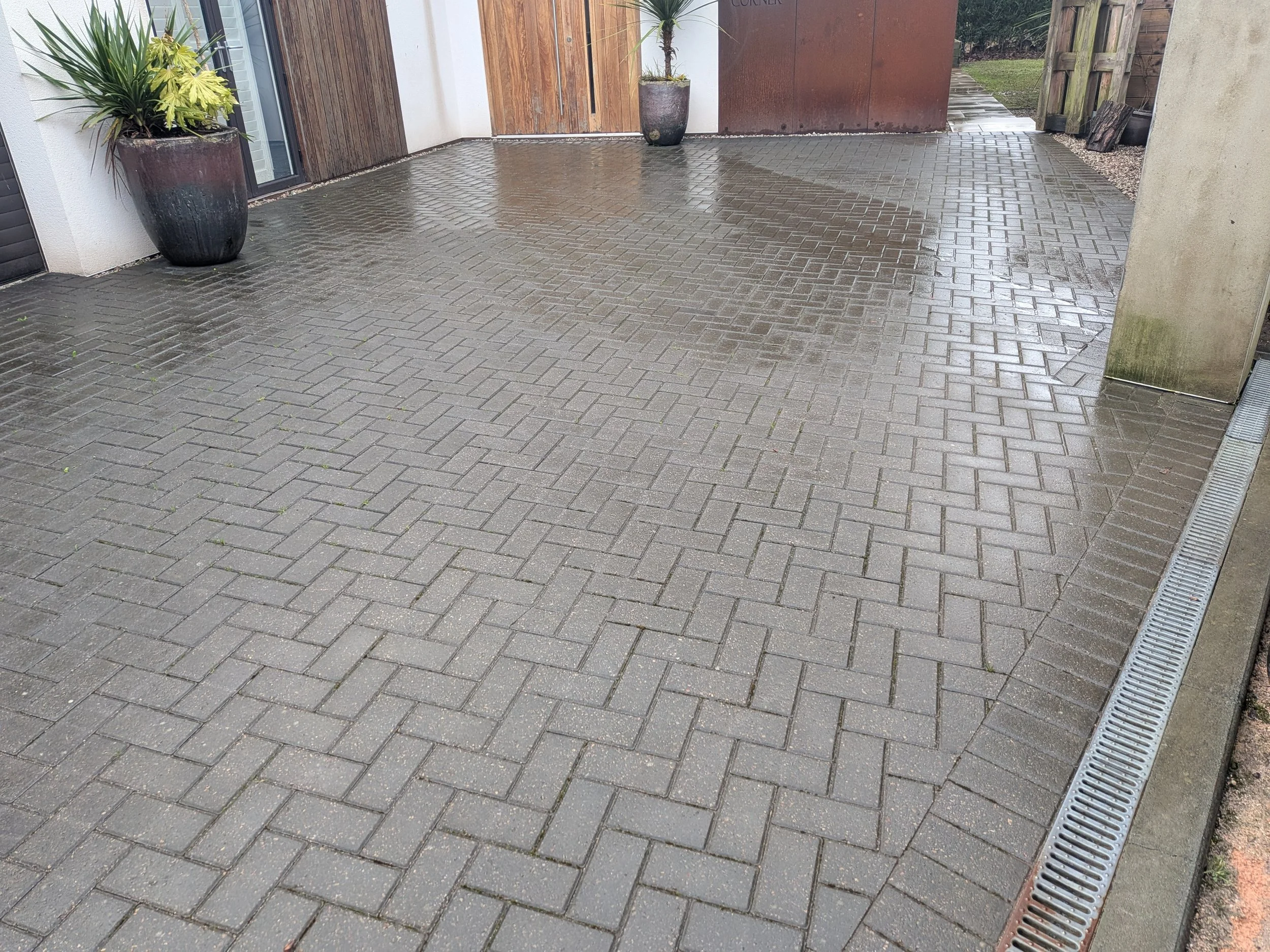
Garden Agents service
Garden Staging & Sales Support
Garden Agents (part of Totnes Gardening) offers a unique service designed to help sell houses by "selling the view". Unlike standard maintenance, these agents:
Live Staging: Manicure the grounds immediately before and during open houses to ensure the garden looks its best for viewers.
Buyer Consultation: Stay on-site during viewings to answer potential buyers' questions about plant care and maintenance, aiming to turn "maintenance fear" into "lifestyle desire".
Expertise: Operated by a local professional with over 20 years of experience, including training at Dartington Hall Gardens.
For more details, you can visit the Garden Agents service page.
"Garden Agents" is a specialized branch of Totnes Gardening, operated by Kevin Hare. It is designed to bridge the gap between traditional gardening and property sales by acting as a "sales team" for your outdoor space.
Core "Garden Agent" Services
Silent Manicuring: The service uses 100% professional battery-powered equipment. This allows the agent to continue trimming, edging, and sweeping during active house viewings without noise or fumes disrupting the potential buyers' experience.
Real-Time Maintenance: While an estate agent handles the interior, the Garden Agent stays outside to keep the patio swept and leaves cleared in real-time as viewers arrive.
Expert Buyer Interaction: The agent acts as an on-site consultant, answering technical horticultural questions that estate agents typically cannot, such as plant care requirements or maintenance schedules, to reassure nervous buyers.
Specialist Support & Expertise
"Lifesaver" Tidy-Ups: Rapid-response garden clearances designed to reclaim overgrown spaces immediately before a property listing goes live.
Ecological Focus: The service emphasizes organic practices, rewilding, and biodiversity, which can be a significant selling point for eco-conscious buyers in the South Hams area.
Professional Background: Kevin Hare has over 20 years of experience, including professional training at Dartington Hall Gardens.
Service Availability & Pricing
Coverage: Primarily serves Totnes and surrounding villages like Dartington, Harberton, Berry Pomeroy, and Stoke Gabriel.
Costs: While specific staging packages are bespoke, general specialist horticultural services in the area typically range from £35 to £45+ per hour.
Booking: You can reach the service via the Totnes Gardening Website, email at kevin@totnesgardening.co.uk, or by calling 07935 721172.
Would you like to know more about the standard maintenance rates in Totnes or details on their organic gardening methods?

Slapton Sands, Hanging On by a Thread.🌊
This blog post captures the catastrophic collapse of the A379 Slapton Line as documented by digital creator Kevin Hare. It tells the story of how the sea finally reclaimed the iconic coastal road, ending its life as a through-route.
For decades, the A379 "Slapton Line" has been a fragile bridge between the sea and the Ley. This week, after a relentless battering from the Atlantic during Storms Ingrid and Chandra, that bridge finally broke.
Through the lens of digital creator Kevin Hare, we’ve watched the heartbreaking transition from a storm warning to a total loss. Here is the story of the collapse.
23 January: "Hanging On by a Thread"
The warning signs arrived early. Kevin captured the first signs of real trouble with footage of a "storm brewing" even at low water.
“Slapton Hanging On by a Thread #stormIngrid #StormChandra. Wind warnings have now been issued. Some more footage of the storm brewing...” 📹 Video: Watch here
As the waves surged against the shingle bank, the vulnerability of the road became clear. Local residents commented on the "rough" conditions, noting that even the seals were staying away from the beach.
29 January: Secrets Unearthed
By the end of the month, the erosion was so severe that the beach began revealing its hidden history. While the finds were a "silent witness" to the area's WWII past, they were also a grim indicator that the natural "buffer" of shingle protecting the A379 was being stripped away at an alarming rate.
“Slapton Sands Secrets Unearthed. I was exploring #SlaptonSands today and my finds tell an incredible, secret WWII story. Every piece is a silent witness...”
4 February: "End of the Line"
The tipping point occurred overnight on Monday, 2 February. A combination of high tides and storm surges scoured away the land beneath the tarmac. A 200-metre section of the highway and the Torcross "Tank" car park collapsed into the sea. Kevin returned to deliver the definitive verdict for the community.
“It's gone, end of the line...” 📍 Location: Dartmouth/Torcross
5 February: The Aftermath
This morning, the reality of the permanent landscape change set in. What was once a vital coastal link now ends in a jagged, 15-foot vertical drop where the highway once stood.
“Walked #Slapton Sands this morning and the devastation is hard to process...”