🌿 How Totnes Gardening Thinks About Snowdrops
Snowdrops in a Rewilding Garden: Balancing Native and Non-Native Species
16 Feb
Written By kevin hare
Snowdrops are a vital early-season resource. They provide nectar and pollen for pollinators like queen bumblebees and honeybees that emerge from hibernation on warmer winter days when very few other food sources are available.
Snowdrops good for pollinators 🐝 Snowdrops are a vital early-season resource. They provide nectar and pollen for pollinators like queen bumblebees and honeybees that emerge from hibernation on warmer winter days when very few other food sources are available.
Snowdrops in a Rewilding Garden: Balancing Native and Non-Native Species 20 Feb | Written By kevin hare
Snowdrops are small, white, bell-shaped flowers that bloom early in spring, often seen in gardens. They are not native to the UK but have naturalized since the 16th century. Snowdrops provide nectar and pollen for early pollinators like bumblebees , supporting garden biodiversity. While not ideal for strict rewilding, they can complement gardens with native plants.
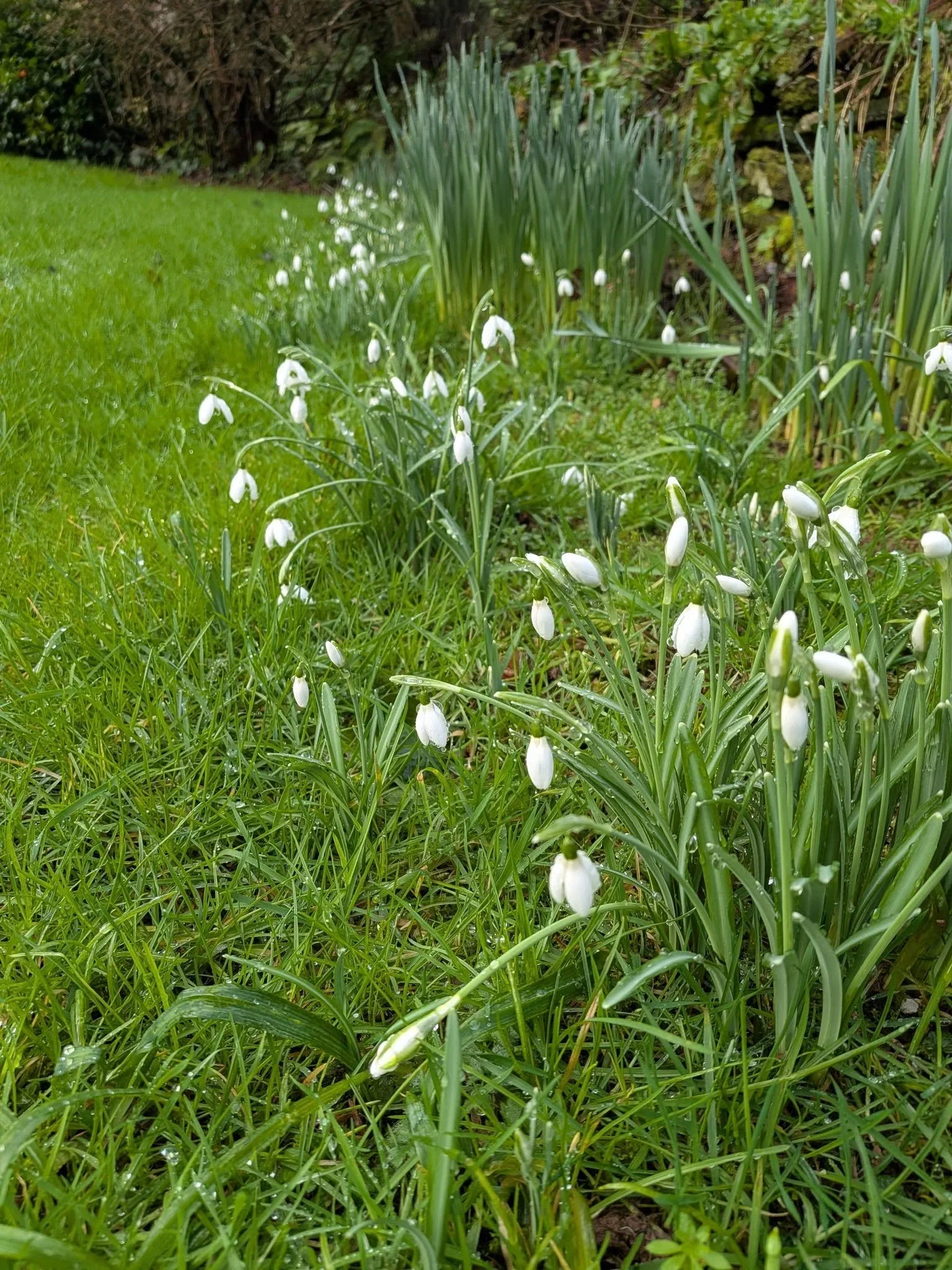
What Are Snowdrops? Snowdrops, scientifically known as Galanthus nivalis, are delicate, white flowers that bloom in late winter to early spring, typically from January to March. They are known for their bell-shaped blooms and are often one of the first signs of spring, even pushing through snow, which is how they got their name.
Are They Native to the UK? No, snowdrops are not native to the UK. They were introduced from Europe, likely in the 16th century, and have since naturalized, meaning they’ve spread and established in the wild, especially in woodlands, parks, and gardens.
How Do They Fit Into Gardening and Rewilding? While snowdrops are not native, they do provide ecological benefits by offering nectar and pollen for early pollinators like bumblebees, which are active in late winter. This makes them valuable in gardens, especially when little else is blooming. However, for rewilding, which focuses on restoring natural ecosystems with native plants, snowdrops are less ideal. They can still be part of a diverse garden if balanced with native species to support local wildlife. 🦋
A Surprising Fact About Snowdrops It’s surprising that despite their widespread presence in the UK, snowdrops are considered Near Threatened in their native European habitats due to over-collection for gardens, highlighting the importance of sustainable gardening practices.
Introduction to Snowdrops Snowdrops are herbaceous, perennial bulb-forming plants belonging to the Amaryllis family (Amaryllidaceae). The genus name Galanthus is derived from Greek, meaning “milk flower,” and the species name nivalis meaning “of the snow.” They are characterized by their small, white, bell-shaped flowers, typically 7–15 cm tall, with narrow, grey-green leaves. The inner three tepals have a distinctive green “V” pattern, distinguishing them from similar plants like snowflakes.
Native Status and Naturalization in the UK Snowdrops are native to damp woods and meadows on the continent; their first known cultivation in the UK was recorded in 1597. It is believed they were introduced as ornamental garden plants and have since naturalized, forming “valleys” of white blooms across the country.
Ecological Role and Benefits for Wildlife They offer both nectar and pollen, serving as a vital food source for bumblebees emerging from hibernation. While pollination in snowdrops is frequently poor due to the cold, they reproduce via bulb division. Interestingly, when they do set seed, they rely on ants for dispersal—a process where ants carry the seeds back to their nests to eat a fatty attachment called an elaiosome, effectively "planting" the seed in a new location! 🐜
Care and Cultivation Tips For gardeners interested in growing snowdrops, they prefer moist but well-drained soil and partial shade.
Bulbs: Plant in the fall (October to November), spacing them 3 inches apart and 3 inches deep.
In the Green: Divide and plant after flowering in spring (February to March). This is the preferred method for Totnes gardens as "dry" bulbs often fail to establish.
Legal and Ethical Considerations
It is important to note that under the Wildlife and Countryside Act 1981, it is illegal to uproot any wild plant without the landowner's permission. This applies even to naturalized species like snowdrops. Additionally, all Galanthus species are listed under CITES Appendix II, which strictly regulates international trade to prevent over-collection in the wild. For ethical gardening, always ensure you buy nursery-grown bulbs to respect these conservation efforts.
Snowdrops are not native — but they’re welcome
🌿 How Totnes Gardening Thinks About Snowdrops
1. Snowdrops are not native — but they’re welcome
Kevin points out that snowdrops (Galanthus nivalis) aren’t native to the UK, but they’ve been here since the 16th century and are now naturalised. They’re not ideal for strict rewilding, but they fit beautifully into wildlife‑friendly gardens when used thoughtfully.
2. They support early pollinators
Snowdrops flower from January to March, often pushing through frost or snow. This makes them one of the earliest nectar and pollen sources for bumblebees and other early‑emerging insects.
Totnes Gardening emphasises this ecological value — even if a plant isn’t native, it can still play a role in a balanced garden ecosystem.
3. How they fit into an eco‑garden
Totnes Gardening’s eco‑approach focuses on:
biodiversity
soil health
low‑intervention planting
wildlife habitat creation
Snowdrops complement this by:
thriving in naturalistic drifts
pairing well with native woodland plants
providing early-season food for insects
requiring minimal maintenance once established
They’re treated as supporting players in a wider ecological design.
4. Where they don’t fit
Kevin notes that snowdrops aren’t suitable for strict rewilding, where only native species are used. But for most gardens — especially in Totnes’ mixed woodland and cottage‑style settings — they’re a gentle, beneficial addition.
Snowdrops are small, white, bell-shaped flowers that bloom early in spring, often seen in gardens.
They are not native to the UK but have naturalized since the 16th century.
Snowdrops provide nectar and pollen for early pollinators like bumblebees, supporting garden biodiversity.
While not ideal for strict rewilding, they can complement gardens with native plants.
What Are Snowdrops?
Snowdrops, scientifically known as Galanthus nivalis, are delicate, white flowers that bloom in late winter to early spring, typically from January to March. They are known for their bell-shaped blooms and are often one of the first signs of spring, even pushing through snow, which is how they got their name.
Are They Native to the UK?
No, snowdrops are not native to the UK. They were introduced from Europe, likely in the 16th century, and have since naturalized, meaning they’ve spread and established in the wild, especially in woodlands, parks, and gardens.
How Do They Fit Into Gardening and Rewilding?
While snowdrops are not native, they do provide ecological benefits by offering nectar and pollen for early pollinators like bumblebees, which are active in late winter. This makes them valuable in gardens, especially when little else is blooming. However, for rewilding, which focuses on restoring natural ecosystems with native plants, snowdrops are less ideal. They can still be part of a diverse garden if balanced with native species to support local wildlife.
A Surprising Fact About Snowdrops
It’s surprising that despite their widespread presence in the UK, snowdrops are considered critically endangered in their native European habitats due to over-collection for gardens, highlighting the importance of sustainable gardening practices.
Survey Note: Detailed Analysis of Snowdrops in Gardening and Rewilding Contexts
This section provides a comprehensive exploration of snowdrops (Galanthus nivalis), their characteristics, ecological role, and relevance to gardening and rewilding, particularly in the context of Totnes Gardening’s services and the user’s observation in a garden setting. The analysis is informed by extensive web research and aligns with the user’s interest in snowdrops seen at work, potentially connecting to rewilding practices.
Introduction to Snowdrops
Snowdrops are herbaceous, perennial bulb-forming plants belonging to the Amaryllis family (Amaryllidaceae), with the genus name Galanthus derived from Greek, meaning “milk flower,” and the species name nivalis meaning “of the snow.” They are characterized by their small, white, bell-shaped flowers, typically 7–15 cm tall, with narrow, grey-green leaves and tepals (flower segments) that lack true petals. The inner three tepals have a distinctive green “V” pattern, distinguishing them from similar plants like summer snowflake (Leucojum aestivum) or spring snowflake (Leucojum vernum).
Snowdrops bloom early, often from January to March, and in milder winters, they may flower as early as December or November. This early blooming makes them a herald of spring, symbolizing hope and renewal, and they are frequently associated with the Christian festival of Candlemas (February 2nd), earning them the nickname “Candlemas Bells.” Historically, they were used to decorate churches, and in Yorkshire, they were worn by village maidens as symbols of purity.
Native Status and Naturalization in the UK
Snowdrops are not native to the UK, despite their long history and widespread presence. They are native to damp woods and meadows on the continent, with their first known cultivation in the UK recorded in 1597 and wild sightings noted in Gloucestershire and Worcestershire by 1778. It is believed they were introduced as ornamental garden plants, possibly as early as the 16th century, and have since naturalized, forming “valleys” of white blooms across the country, especially in woodlands, riverbanks, parks, gardens, meadows, and scrub areas.
The naturalization process involved garden escapees spreading into the wild, and they are now a familiar sight in many UK landscapes. However, their non-native status is significant for ecological considerations, particularly in rewilding efforts, which prioritize native species to support local ecosystems.
Ecological Role and Benefits for Wildlife
While snowdrops are not native, they provide ecological benefits, particularly for early pollinators. They offer both nectar and pollen, serving as a vital food source for bumblebees and other insects emerging from hibernation in late winter and early spring. This is especially important when other food sources are scarce, making snowdrops a valuable addition to gardens during this period. For example, sources like Beverly Bees and the Almanac highlight their role as winter forage for bees, with bumblebees being among the few insects active early enough to take advantage of their blooms.
However, it’s noted that pollination in snowdrops is frequently poor due to the cold conditions during their flowering period, and they primarily reproduce via bulb division rather than seed set, which relies on ants for dispersal. This suggests their contribution to pollinator support is limited compared to native plants, which may offer more consistent and diverse resources for wildlife.
Care and Cultivation Tips
For gardeners interested in growing snowdrops, they are relatively easy to care for. They prefer moist but well-drained soil and can thrive in partial shade, making them suitable for woodland gardens or under trees. Planting can be done in two ways:
Bulbs: Plant in the fall (October to November), spacing them 3 inches apart and 3 inches deep, with the pointy end up.
In the Green: Divide and plant after flowering in spring (February to March), as dry bulbs may not re-establish well.
Snowdrops naturalize over time, forming clumps and spreading, which can create natural-looking drifts. They are deer-resistant and mildly toxic, deterring pests, and can survive cold temperatures due to adaptations like hardened leaf tips and antifreeze-like sap.
Relevance to Rewilding
Rewilding, as emphasized by Totnes Gardening, focuses on increasing biodiversity and restoring natural processes, often prioritizing native plants to support local wildlife. Given that snowdrops are non-native, they are not ideal for strict rewilding efforts. Native plants like primrose, bluebell, and red campion, which are better adapted to the UK’s ecosystems, are typically recommended to support a wider range of pollinators, birds, and other species.
However, in a garden setting, especially one already modified by human activity, snowdrops can play a complementary role. They can be part of a diverse planting scheme that includes native species, providing early-season resources for pollinators while not displacing native flora. It’s crucial to ensure they are not invasive, and research indicates snowdrops are not considered invasive in the UK, with no evidence of them causing ecological harm or outcompeting native species.
Balancing Non-Native Plants in Gardens
For gardeners in Totnes, incorporating snowdrops can be acceptable if balanced with native plants. For example, creating a wildflower meadow with natives like oxeye daisies and red campion, alongside a patch of snowdrops, can provide continuous support for pollinators throughout the seasons. Totnes Gardening’s approach, as seen in their rewilding service, might involve advising clients to prioritize natives but allow for non-natives like snowdrops in areas where they enhance biodiversity without harm.
Legal and Ethical Considerations
It’s worth noting that while snowdrops are not protected under UK law (unlike bluebells, for example), picking or digging them up from the wild requires landowner permission to avoid legal issues. This is important for ethical gardening practices, ensuring conservation efforts are respected, especially given that some snowdrop species are critically endangered in their native European habitats due to over-collection.
Snowdrops, while not native to the UK, are a cherished part of many gardens, offering early nectar and pollen for pollinators and symbolizing hope. For rewilding, they are less ideal but can complement a garden if balanced with native plants. Gardeners in Totnes can enjoy their beauty and ecological benefits, ensuring a diverse, wildlife-friendly space with guidance from Totnes Gardening’s expertise.
kevin hare