Short Grass Cut
Written By kevin hare
Benefits of cutting grass short
Kevin’s Tip: The standard mowers are often set too high, encouraging weak, leggy growth. By lowering the blade (carefully, without "scalping" it) you train the lawn to grow "sideways," creating that carpet-like density.
Why I’m Lowering the Blades: The Science of a Thicker Totnes Lawn
Written by Kevin Hare | Totnes Gardening
If you’ve seen me out in the gardens this week, you might have noticed I’m taking the grass down a bit shorter than usual. It can feel a bit brutal—especially after the relentless 2026 rain has left our local clay soil so sodden—but there is a very deliberate method to the madness.
I often tell my clients that grass is a bit like a hedge; if you never clip it, it gets leggy, thin, and loses its structural integrity. By keeping the blades short, I’m essentially "training" the plant.
The Science of the "Short Cut"
When grass is allowed to grow tall, it’s a bit of a glory-seeker. It puts every scrap of its energy into the tip of the blade to reach for the sun. But for a high-quality garden lawn, we want that energy elsewhere.
The secret is in energy redirection. By cutting the grass short, I’m forcing the plant to undergo a hormonal shift. It realizes it can’t go up, so it starts to go out. It puts that vital energy into its roots and new shoots instead of height. This is exactly what helps your grass to both spread and thicken, creating that lush, carpet-like "sward" we all want to see come summertime.
Today’s Process: Reclaiming the "Slip-Zone"
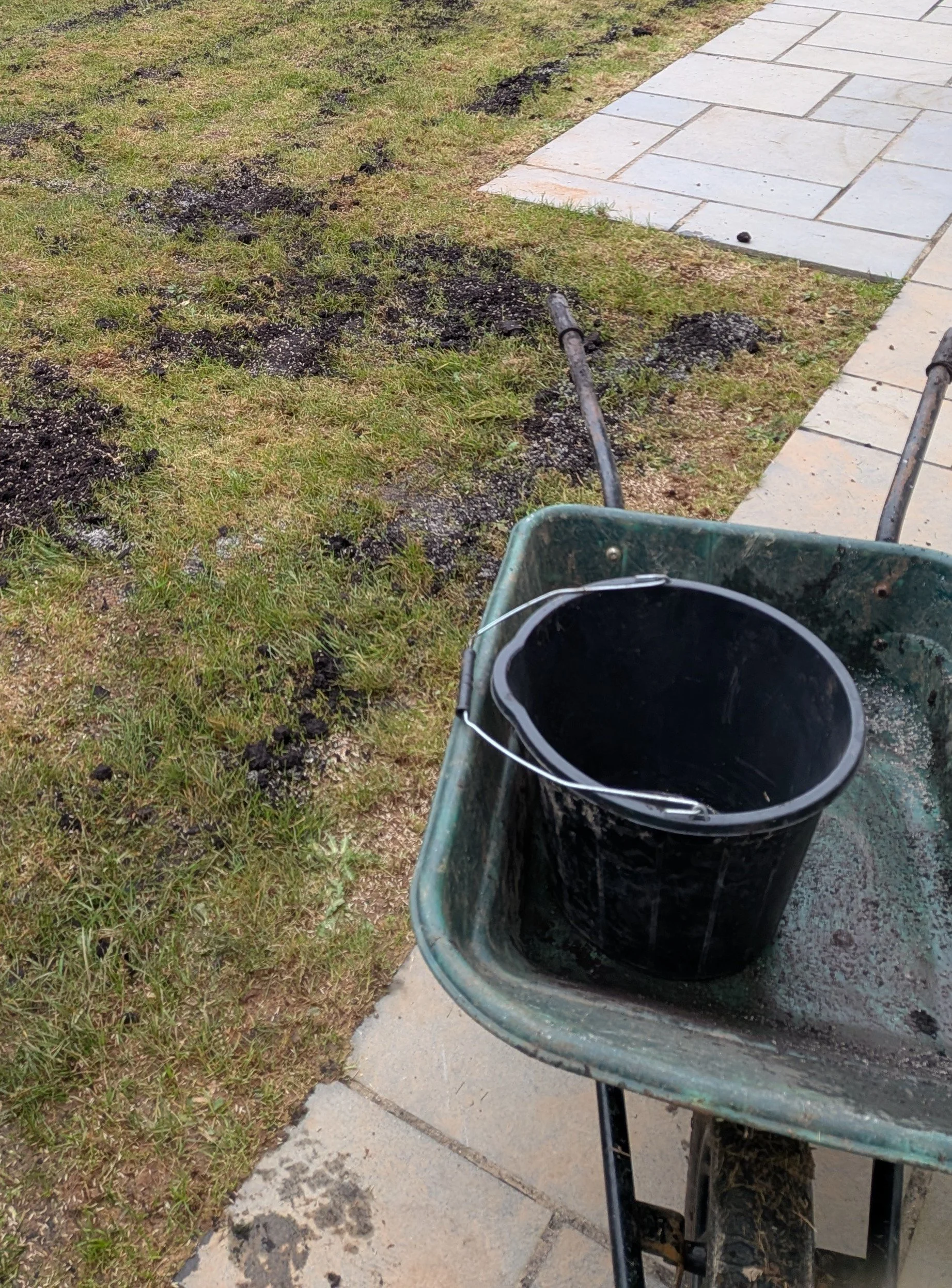
In the photo from today’s job here in Totnes, the lawn had become a genuine "slip-zone" risk. Between the 2026 sunlight deficit and the constant damp, the moss had started a total takeover.
To get this back on track, I followed my professional four-step "Reset":
Clear & Scuff: I cleared the moss and "scuffed up" the soil surface. This breaks the crust and gets some much-needed oxygen back down to the roots.
The Local Mix: I applied a heavy top-dressing of a local Short Grass/Sand mix. This is essential for improving drainage in our heavy South Devon soil.
The Sowing: I hand-sowed a high-performance grass seed. Because the grass is short, that seed hits the soil directly rather than getting hung up in long blades.
The Training: I’ve cut the existing grass short to force that energy into sideways growth, ensuring the new shoots have the space and light they need to thrive.
Quiet Progress
One of the best parts of this job is that I can do all of this in "Quiet Mode." By using my professional battery-powered mowers, I can maintain these precise, short edges without the roar of a petrol engine echoing through the town’s lanes or disturbing your lunch. It’s a conscientious approach that I’ve honed over 20 years, starting back during my training at Dartington Hall Gardens.
Whether I’m maintaining a small courtyard path or a larger family lawn, the goal is always the same: building a managed living system that’s dense enough to naturally crowd out weeds and moss.
Is your lawn looking a bit thin or battered after the storms? I’m currently prioritizing "Garden Rescue" jobs across the South Hams. If you need a hand getting your green space back to its best, give me a shout. I work quietly, efficiently, and I’m a Registered Waste Carrier, so I’ll take the mess with me.
The horticultural truth: Cutting grass encourages it to put its energy into roots and new shoots instead of height. This is the simple redirection of resources that helps your grass to both spread and thicken.
Cutting grass encourages it to put its energy into roots and new shoots instead of height.
This will help your grass to both spread and thicken.